Hirsutism: definition, causes, and treatments
Hirsutism is excessive hair growth in areas sensitive to hormones. It is most often linked to PCOS and is managed on two levels: the cause, with a doctor, and the hair, with an appropriate technique.


Melisande
Founder of Reflet 🫶
Publié le16.10.2026 Modifié le20.11.2026
Coarse hairs on your chin that you pluck every morning. A dark line on your stomach. A few hairs around your areolas. And often, a well-kept secret: "I haven't even told my own mother," says Stéphanie Prudhomme, founder of Dermalyse, a clinic specializing in permanent hair removal via thermolysis, and a training center.
Stéphanie knows the subject from the inside: she has been hiding chin hair since she was 21 and only discovered its hormonal origin years later, with a diagnosis of adenomyosis, most likely associated with PCOS. Today, the vast majority of women who walk through her clinic's door have a hormonal diagnosis. In her Reflet episode, she explains everything you need to know so you no longer have to go through this alone.
Hirsutism: the definition
Hirsutism refers to excessive hair growth in women in areas that are normally not very hairy and are sensitive to hormones known as androgens (such as testosterone). According to La Revue du Praticien, it particularly affects the face, chest, back, the midline of the stomach, the groin, and the inside or back of the thighs.
Stéphanie refers to them as hormone-dependent areas. In women, these are primarily:
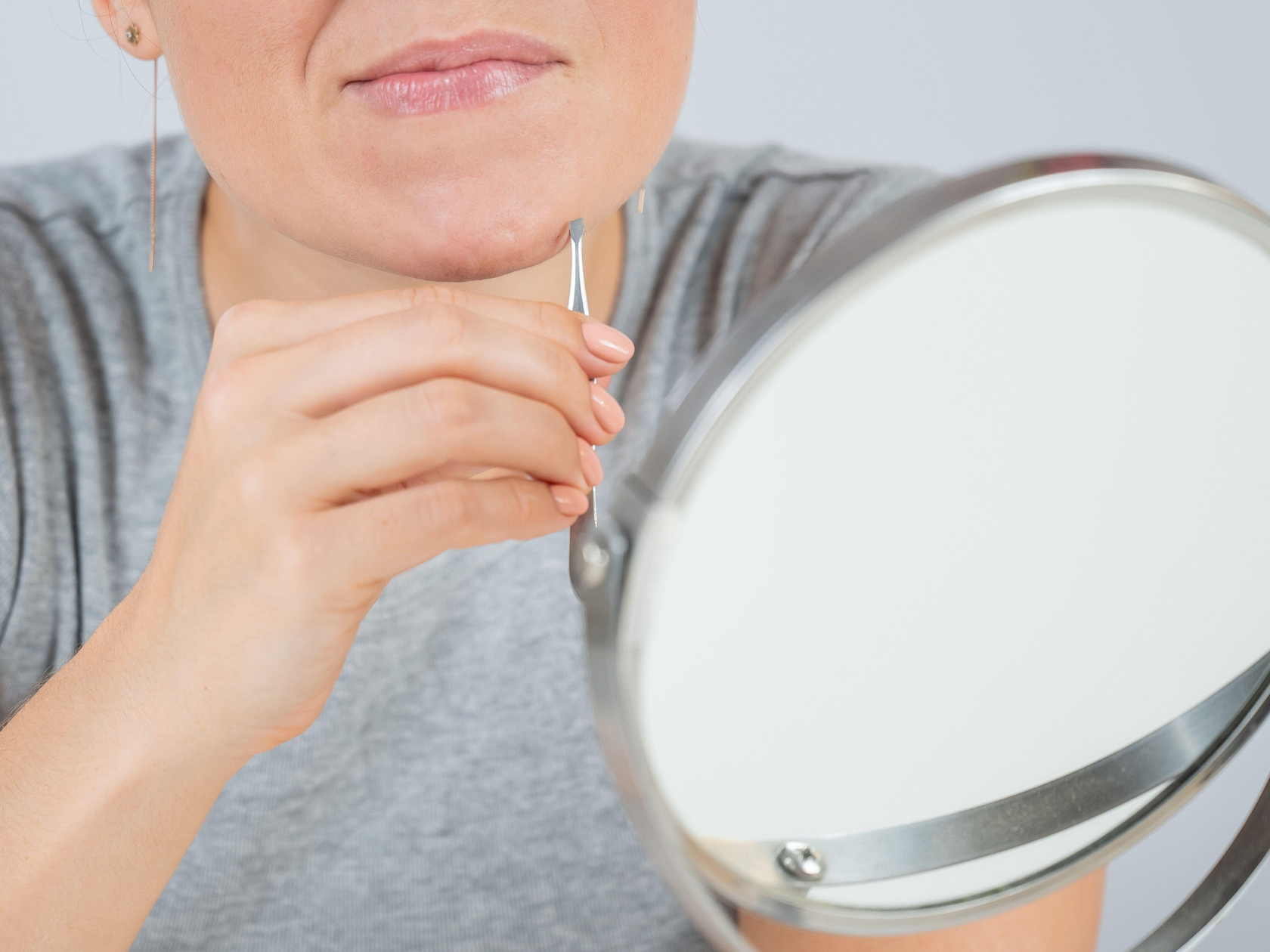
- the jawline, starting with the chin ("the number one area, I'm not looking for");
- the chest, particularly around the areolas;
- the umbilical line, the line that runs down from the navel.
The upper lip, however, is not considered a hormone-dependent area, except when moving toward the lower part of the face.
Hirsutism or just body hair?
Having a few hairs on the stomach line or around the areolas doesn't necessarily mean there is a hormonal problem. Meli mentions this in the episode: she has a few hairs on her umbilical line, without having PCOS. "It can also just be the way it is," confirms Stéphanie. Hormones fluctuate throughout life, and body hair varies greatly from one woman to another, depending on age, background, or family history.
To assess hirsutism, doctors often use the Ferriman-Gallwey score, which rates hair growth area by area. A score above a certain threshold points toward hirsutism. This assessment remains partly subjective, and what also matters is how you feel. To tell the difference, also read our article on excessive hair growth in women.
The causes of hirsutism
Hirsutism comes from either an excess of androgen hormones, produced by the ovaries or adrenal glands, or from skin that is too sensitive to normal hormone levels.
PCOS, by far the most common cause
According to the Revue du Praticien, Polycystic ovary syndrome is responsible for 80 to 90% of hirsutism cases. It affects between 5 and 15% of women. This syndrome is now also called PCOS (polycystic ovarian endocrine metabolic syndrome), a more accurate name that shows it is not limited to the ovaries. We have a dedicated article on this: PCOS and body hair.
This aligns with what Stéphanie observes: "80 to 85% of the people who come to see us have PCOS, endometriosis, or at the very least, a confirmed hormonal diagnosis."
Other causes
- Idiopathic hirsutism (with no identifiable hormonal cause), in about 4 to 6% of cases: the ovaries function normally, but the skin is more sensitive to hormones.
- Adrenal enzyme deficiency (non-classic form), in 2 to 4% of cases.
- Perimenopause and menopause, when the balance between estrogens and androgens shifts. Stéphanie actually sees many women during this period. Find our content on perimenopause.
- More rarely, an ovarian or adrenal tumor, or Cushing's syndrome.
- Certain medications can also promote increased hair growth.
Consult a doctor promptly if your hair growth appears or increases suddenly, especially long after puberty, or if it is accompanied by a deeper voice, balding, significant weight gain, or the cessation of your periods. These signs must be investigated without delay.
How hirsutism is diagnosed
Diagnosis is made with a doctor: a general practitioner, gynecologist, endocrinologist, or dermatologist. It is based on:
- your history : how long it has been going on, the rate of growth, your cycles, and your family medical history;
- the examination of hair growth, using the Ferriman-Gallwey score;
- a blood test : testosterone, and depending on the case, other hormones (17-OH-progesterone, DHEA-S, LH, FSH, prolactin, TSH). It is performed at the beginning of the cycle, and hormonal contraception must often be stopped a few months beforehand for the result to be reliable;
- a pelvic ultrasound if PCOS is suspected.
Meli mentions it in the episode: PCOS is always diagnosed by a doctor. And getting a diagnosis is the first step toward finding solutions, both medical and natural.
Treating hirsutism
Hirsutism is managed on two complementary levels.
1. Addressing the cause, with a doctor
Depending on the diagnosis, your doctor may suggest:
- a suitable pill , which reduces androgen production;
- an anti-androgen treatment, by prescription;
- PCOS management, which often includes diet, physical activity, and insulin management.
These treatments act on the growth of new hair, but their effects are slow, often taking several months. They do not remove hair that is already present. Meli also points out that supplements or herbs can help limit growth "from the inside": this should be discussed with a professional, as they have their own precautions.
2. Dealing with existing hair
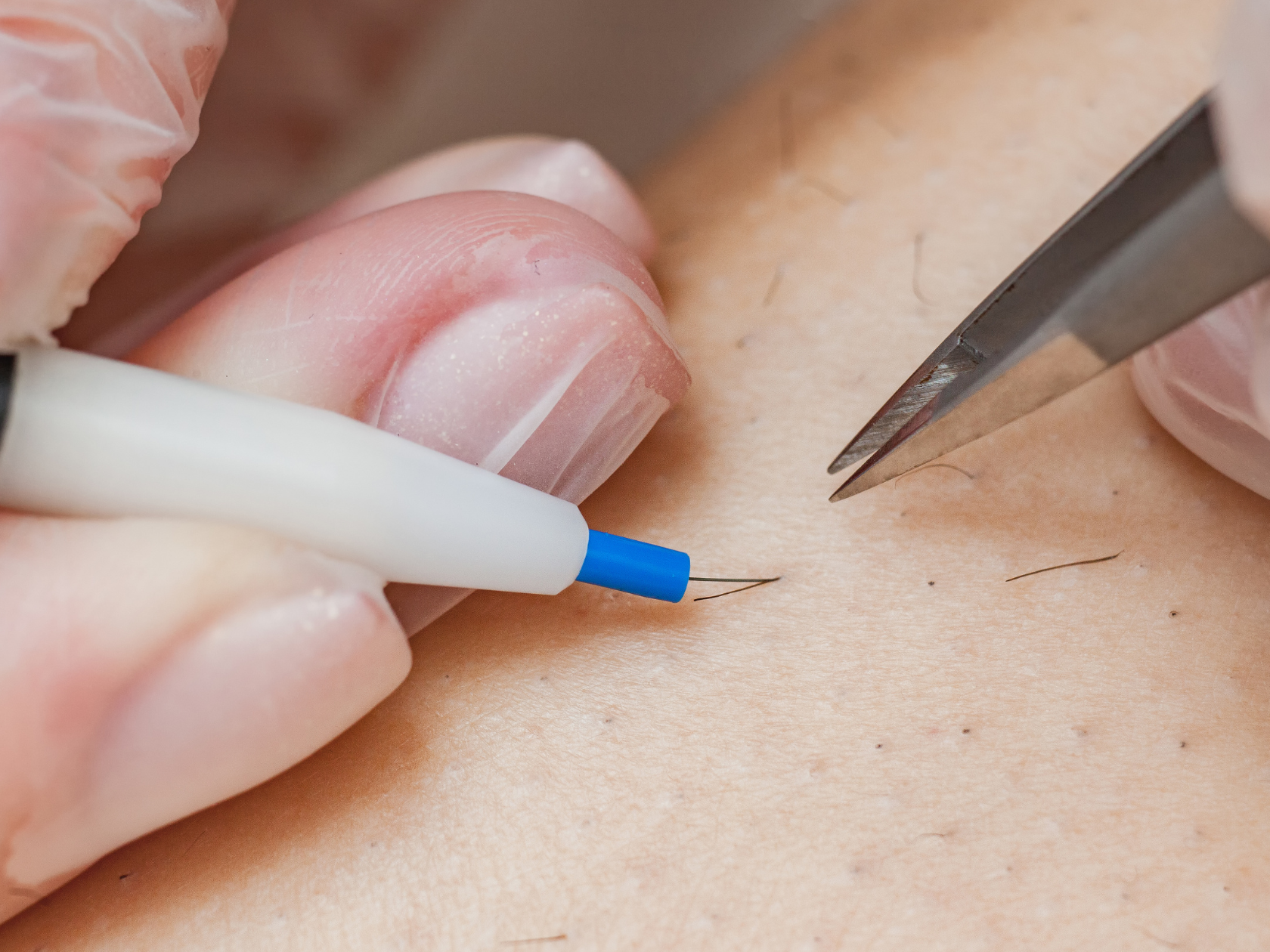
This is Stéphanie's area of expertise. Temporary methods (tweezing, waxing, threading, shaving) provide immediate relief but must be repeated endlessly. For a long-term solution, there are two main types of permanent hair removal:
- photoepilation : laser and intense pulsed light;
- electrolysis hair removal : electrolysis, thermolysis, and blend.
Her most important piece of advice: avoid laser and intense pulsed light on hormone-dependent areas. They risk causing paradoxical hypertrichosis : by stimulating fine or dormant hairs, they can cause hair to grow back denser than before. For these areas, Stéphanie recommends thermolysis, a technique that treats hairs one by one, which she likes to call hormonal hair removal. We explain everything in our article on electrolysis and thermolysis hair removal and in the one on chin hair.
Common misconceptions about hirsutism
It's just aesthetic. No. Hirsutism is often a visible sign of a hormonal imbalance, which can also affect your cycles, fertility, or metabolism. That’s why it deserves a medical check-up.
Laser fixes everything. Not on hormone-dependent areas. It can even make the situation worse by causing paradoxical hair growth.
If I treat the cause, the hair will fall out. Medical treatments slow down the growth of new hair, but the hair that is already there remains. That’s why it’s best to combine both approaches.
It’s rare. Not at all. PCOS, which is the main cause, affects 5 to 15% of women. At Reflet, it’s one of the most common topics that comes up in our community.
I’m the only one. That’s what Stéphanie thought at 21. She then dedicated her career to the thousands of women who were going through the same thing.
Living with hirsutism: the weight of silence
We talk a lot about hair, but less about the toll it takes. "Unless you've been through it, you can't imagine what it's like to have to hide it, to always think that people aren't looking you in the eye, that they're scrutinizing your chin," says Stéphanie. Some women shave morning and night, develop ways to conceal it, and cry during consultations because it’s the first time they’ve ever talked about it.
Two messages stand out from the episode:
- You are not alone. Thousands of women are going through the same thing.
- Keeping your hair is also a legitimate choice. Stéphanie says it herself: she doesn't advocate for "zero hair." Everyone is free to do what they want with their own body.
And if people around you make hurtful comments, that’s not okay either. You have the right to be loved as you are and to take care of yourself in your own way.
Discover the episode with Stéphanie Prudhomme
You can also find all our content on PCOS.
Discover the Reflet PCOS / PCOD journey
Key takeaways
- Hirsutism is excessive hair growth in hormone-sensitive areas: the chin, face, chest, and abdomen.
- PCOS is the cause in 80 to 90% of cases, but other causes exist and should be investigated.
- Diagnosis is made with a doctor through an examination and a blood test.
- We act on two levels: the cause, with medical treatment, and the hair, with appropriate hair removal.
- For hormone-dependent areas, thermolysis is preferred: laser treatment carries a risk of paradoxical hair growth.
FAQ
What is hirsutism?
It is excessive hair growth in women in areas sensitive to androgen hormones, such as the chin, chest, or abdomen.
What is the main cause of hirsutism?
Polycystic ovary syndrome (PCOS, or PCOD), which is responsible for 80 to 90% of cases.
Which doctor should I see for hirsutism?
Your general practitioner, gynecologist, endocrinologist, or dermatologist can support you and order a check-up.
Can hirsutism be treated?
You can reduce hair growth by treating the underlying cause and eliminate existing hair with appropriate permanent hair removal. Results take time.
Can I use laser treatment for hirsutism?
Laser treatment is not recommended for hormone-dependent areas, such as the chin, due to the risk of paradoxical hair growth. Thermolysis is more suitable for these areas.
The information in this article is for educational purposes only and does not replace professional medical advice. Stéphanie Prudhomme is a permanent hair removal practitioner and trainer; she is not a healthcare professional. For any diagnosis or treatment of hirsutism, please consult your doctor.
What is hirsutism?
Programs that could help

Les Séries Santé recommandés
Do we freeze our oocytes?
Le Rubis is the first podcast dedicated to egg freezing. I answer all your questions about this journey, I wonder about the emotional impacts of this approach and I give you the keys to take action , as long as it's your choice! If you asked yourself the question Once in your life, Le Rubis is made for you. Available only in French speaking.
I discover the Ruby