.png)
PCOS and pregnancy: a quick guide to optimizing fertility
Is it possible to get pregnant with PCOS? We share with you the first concrete advice to make your dream of becoming a mother come true, even with PCOS!

.png)

Melisande
Founder of Reflet 🫶
Publié le24.12.2025.png) Modifié le03.03.2026
Modifié le03.03.2026
Yes, a pregnancy with a PCOS (Polycystic Ovary Syndrome) is entirely possible, even if the course can sometimes look like an obstacle course. The main challenge? An ovulation that is wanted, often irregular or completely absent. Luckily, there are plenty of strategies out there to give it a little boost.
By combining an adapted lifestyle and tailor-made medical follow-up, you considerably increase your chances of realizing your baby project.
In a nutshell: the key points to getting pregnant with PCOS
If you are in a hurry, here are the essentials to remember to navigate the course PCOS and pregnancy :
- Yes, it is possible: PCOS is the most common cause of infertility linked to ovulation, but it is possible to find these cycles again;
- Your power of action: Your lifestyle is your best ally. A diet with a low glycemic index, regular physical activity, and good stress management may be enough to restore ovulation;
- On the plate: Replace white pasta with lentils, white bread with wholewheat bread, and sweet desserts with fresh fruit with a handful of almonds;
- In motion: Incorporate 30 minutes of brisk walking per day or two yoga sessions per week.
Understanding PCOS and pregnancy in a nutshell
Getting pregnant with PCOS may seem like a mountain to climb, but the goal is actually quite simple: to help your body get back to regular ovulation. Think of your hormonal cycle as a delicate melody. PCOS, on the other hand, untunes some instruments, creating long, unpredictable cycles, and making the design much more complex.
The good news is that you have powerful levers of action. Even changes that seem modest at first glance can have a significant impact and bring harmony back into your cycle.
That's what we're talking about in our video program dedicated to PCOS and its natural treatment : how to find solutions to reactivate your cycle naturally. With the Sans Règles PCOS program, created with Carole Minker, doctor of pharmacy and expert in natural and feminine health, you will have the keys to adopting the right behaviors to get pregnant, even with PCOS.
Understanding PCOS beyond diagnosis
The program allows deciphering the real mechanisms of PCOS (hormonal imbalances, insulin resistance, inflammation, stress), in order to get out of a fixed vision of diagnosis and to understand wherefore periods go away or become irregular This is precisely the key to getting pregnant: to have a quality and regular cycle.
Recreating a favorable hormonal environment
A central learning of the program is to know How to naturally support the body to promote the return of periods, by working on key levers: diet, pace of life, stress, metabolic and hormonal signals.
Using nutrition as a gentle therapeutic tool
The program teaches how to adapt your diet to:
- improving insulin sensitivity,
- reduce inflammation,
- support ovulation, without extreme restrictions or guilt.
Nutrition is becoming a concrete pillar of natural PCOS solution.
Understanding the link between periods, ovulation and fertility
Without periods does not mean permanent absence of fertility. The program helps to Understand the links between cycles, ovulation and hormonal balance, in order to reconnect to its natural potential, even after a long amenorrhea.
Adopting a global and sustainable approach
Instead of looking for a quick solution, the program teaches how to acting on the root causes, by integrating:
- lifestyle,
- stress management,
- relationship to the body,
- coherence between mind and physiology.
.png)
PCOS challenges and pregnancy solutions at a glance
To move forward peacefully on the path to pregnancy with PCOS, the first step is to properly identify the challenges in order to apply targeted solutions. This simple chart will help you see things more clearly and know where to start.
Here is a summary of the main obstacles and concrete actions you can take today.
Decoding PCOS and its impact on your fertility
To fully understand the link between PCOS and pregnancy, we must first lift the veil on this syndrome. Think of your hormonal system as a finely tuned orchestra. Each hormone is an instrument that follows a precise score. With PCOS, some instruments go out of sync — especially insulin and male hormones (androgens). And inevitably, the whole melody of your menstrual cycle is disturbed.
This imbalance is not just a matter of irregular periods. It directly affects the first essential step in conceiving a baby: ovulation.

How hormonal disorders block ovulation
The major obstacle to pregnancy when you have PCOS isAnovulation (the total absence of ovulation) or the dysovulation (a rare and poorer quality of ovulation). All of this is the result of a chain reaction.
When the body resists insulin, its levels soar. This overabundance of insulin will then push the ovaries to produce too many androgens. Normally, these male hormones are present in small quantities in women, but their excess prevents ovarian follicles (the small bags that house eggs) from maturing properly.
Instead of a single follicle growing every month to finally release an egg that is ready to be fertilized, a multitude of small follicles get stuck, as if they were halfway there. It is this accumulation that gives the ovaries this “polycystic” appearance on ultrasound, even if they are not real cysts.
This blockage is far from being trivial; it is really at the heart of design difficulties. Polycystic ovary syndrome is one of the most common causes of infertility, affecting between 5 and 10% women of childbearing age. To give you an idea, PCOS is responsible for nearly 70% cases of infertility linked to an absence of ovulation.
The 3 criteria that make it possible to make the diagnosis
For a doctor to confirm a PCOS diagnosis, they rely on what are called the Rotterdam criteria. It is enough that two of these three conditions are combined for the diagnosis to be made:
- Irregular or completely absent cycles: This is often the first sign that you are getting caught. Cycles that last longer than 35 days or periods that no longer come at all.
- An excess of androgens: Sometimes it shows (stubborn acne, increased hair growth on the face or body, hair loss). Other times, a blood test confirms this by showing too high levels of male hormones.
- Polycystic ovaries: A simple pelvic ultrasound allows you to see this famous accumulation of small immature follicles on one or both ovaries.
Understanding these mechanisms is the very first step in taking control again. It is not inevitable. It is simply a different hormonal function that requires a more targeted approach. To explore the different facets of this syndrome, and better understand the diagnosis, you can watch the 1st episode of PCOS No period No Problem,. It also explains in detail the Rotterdam criteria, how to confirm the diagnosis with a doctor, and how to find the right gynecologist for you.
Before even considering medical treatments, you should know that you already have an immense power to influence your fertility. Implementing a few targeted lifestyle changes can sometimes be enough to wake up sleepy ovulation and create an ideal environment for pregnancy. Think of it as your personal toolbox for regaining control.
Far from being a detail, your lifestyle is the real cornerstone of your career PCOS and pregnancy. By acting on a few key levers, you can directly influence the hormonal mechanisms that put a brake on your fertility.
Adopt a diet that is a good match for your ovulation
Without a doubt, the most powerful lever is your plate. And no, it's not about embarking on a restrictive and frustrating diet. The idea is to understand how certain foods influence your insulin, the famous conducting hormone that is often disrupted in PCOS.
The objective is to favor a low glycemic index diet. In other words, it means choosing foods that don't cause your sugar levels to soar. It helps to stabilize your insulin and, in turn, to calm the overproduction of androgens by your ovaries.
To take action, here are some concrete ideas:
- At breakfast: Swap sugary cereal for a bowl of wholegrain oatmeal with berries and a handful of almonds. You can also opt for scrambled eggs with spinach and a slice of wholewheat bread.
- At lunch: Choose a large salad made with lentils, quinoa, crunchy vegetables, chicken or tofu, and olive oil vinaigrette.
- At dinner: Prefer baked salmon fillet with green beans and a small portion of sweet potatoes over white pasta.
- The simple rule: Try to have a source of protein at every meal (meat, fish, fish, eggs, legumes), a source of good fats (avocado, olive oil, nuts) and lots of vegetables.
These simple adjustments help provide your body with stable energy and ease hormonal turmoil. To go further, discover how to compose your plates in our complete program on diet to boost female fertility, Fertily Diet.
.png)
Move to regulate your hormones
Physical activity is your second greatest ally. His superpower? Improve the sensitivity of your cells to insulin. Imagine that your cells have “locks” for insulin; exercise makes them more efficient, so your body needs to produce less insulin to do the same job.
Moderate weight loss, in the range of 5 to 10% alone, may be enough to restore spontaneous ovulation in many overweight women with PCOS.
There is no need to exhaust yourself with high-intensity sports that can sometimes stress the body even more. The ideal is to find an activity that you enjoy and that you can do regularly.
Solutions to take action:
- Yoga or Pilates: Perfect for managing stress and strengthening yourself gently. A 45-minute session twice a week is a great start.
- Fast walking: 30 minutes a day are enough to get real metabolic benefits. Enjoy your lunch break or get off a bus stop earlier.
- Swimming: A complete sport that works the whole body without impacting the joints.
- Muscle building: Working your muscles (even with light weights) greatly improves your body's sugar management.
Managing stress for a peaceful cycle
Finally, never underestimate the impact of chronic stress on your hormones. Stress increases cortisol, a hormone that can interfere with communication between your brain and ovaries, pausing your cycle.
Simple actions to reduce stress:
- Cardiac coherence: Use a free app to practice 5 minutes of guided breathing, three times per day.
- The relaxing bath: Once or twice a week, take a hot bath with Epsom salt and a few drops of lavender essential oil.
- Digital disconnection: Set a time limit in the evening (e.g. 9 pm) when you turn off all the screens to let your brain rest.
Integrating these practices into your daily life is therefore essential. It could be 10 minutes of meditation in the morning, deep breathing exercises before bed, or simply making time for an activity that really relaxes you. Creating a more serene hormonal environment is a fundamental step in your pregnancy journey.
When lifestyle adjustments aren't enough to wake up lazy ovaries, medicine can provide the boost you need to make a pregnancy with PCOS a reality. Far from being intimidating, these solutions are designed to target ovulatory blockade very precisely.
The objective is simple: to help an egg mature and be released at the right time, to maximize your chances of magic happening.
Metformin is sometimes proposed
In case of proven insulin resistance, your doctor may suggest metformin. This medication, which is known for treating diabetes, is very interesting in the context of PCOS because it improves your body's sensitivity to insulin. We talk about it in episode 5 of PCOS No period No Problem, dedicated to insulin resistance.
By helping to regulate your blood sugar, metformin can indirectly calm excessive androgen production by the ovaries. For some women, sometimes this is enough to restore more regular cycles and spontaneous ovulation. It is also often combined with inductors to increase their effectiveness.
PMA, a possible step if necessary
If simple stimulations do not give results after several well-conducted cycles, your career PCOS and pregnancy could focus on Medically Assisted Procreation (ART).
This may include artificial insemination or, more frequently, in vitro fertilization (IVF). IVF allows complete control of the process: the ovaries are stimulated to obtain several oocytes, they are removed to be fertilized in the laboratory, then an embryo is transferred directly into the uterus. It's a more engaging step, that's for sure, but one that offers a very good chance of success.
To see things more clearly, this table summarizes the two main paths available to you, with their specificities.
Once pregnant, what follow-up for a serene pregnancy?
This long-awaited news is an immense joy. In a journey combining PCOS and pregnancy, appropriate follow-up is not there to worry you, quite the contrary. It is designed to give you peace of mind and anticipate the smallest worries. The objective? Make yourself fully involved in your health and that of your baby.
Having PCOS means that your pregnancy will be monitored with close attention. This is completely normal: hormonal and metabolic imbalances linked to the syndrome may slightly increase some risks.
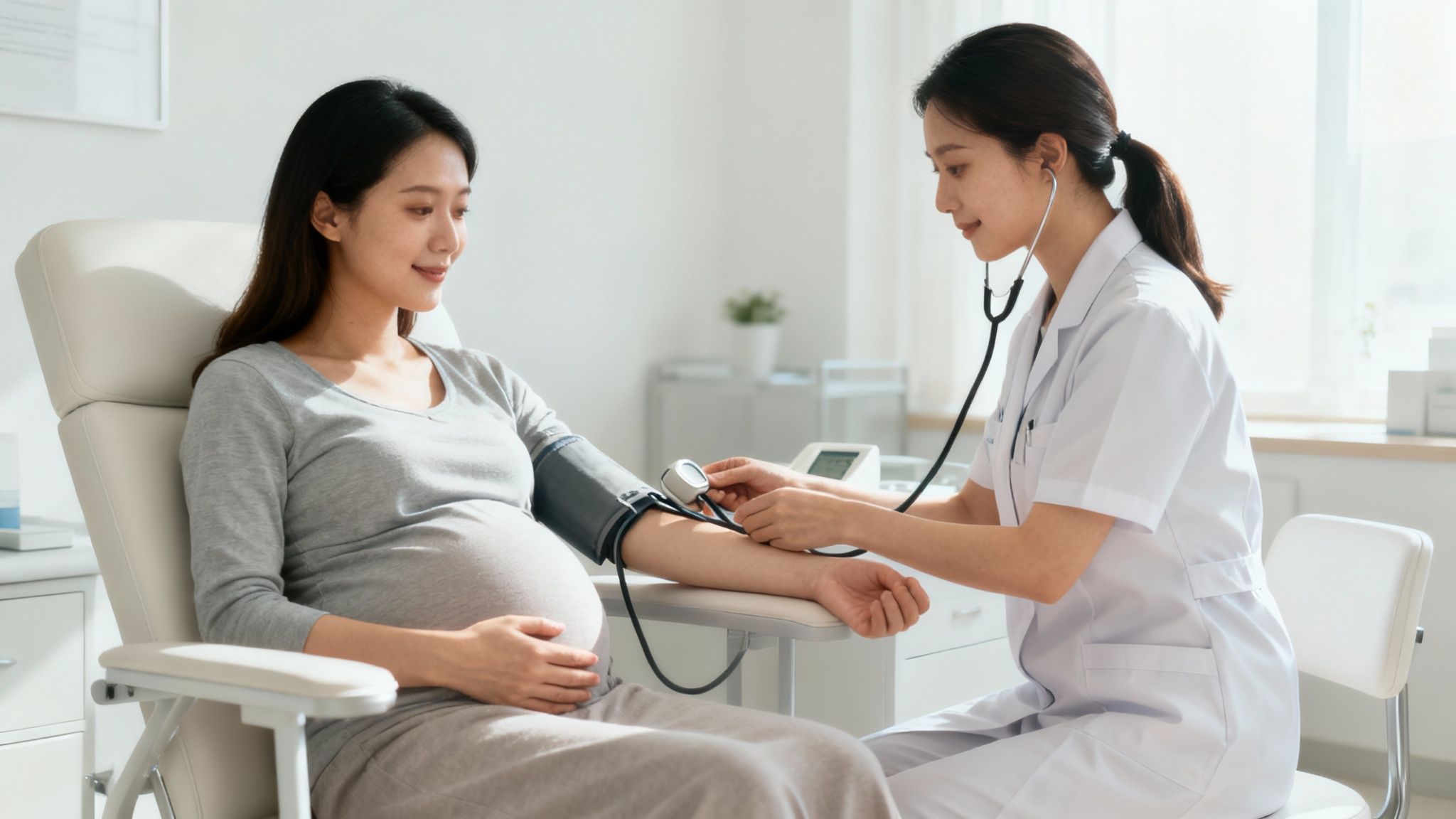
Your medical follow-up, in concrete terms
So what does this antenatal follow-up look like? It will simply be punctuated by a few specific exams to ensure your well-being and that of your baby.
- Early detection of gestational diabetes: You will often be offered a blood glucose test as early as the first trimester and then repeated later if necessary, instead of waiting for the standard screening in the second trimester.
- Blood pressure monitoring: At each consultation, it will be a reflex: check your blood pressure to detect the slightest sign of hypertension.
- Growth ultrasounds: Your doctor may suggest that you have ultrasounds a bit more frequently in the third trimester, just to make sure your baby is growing well and at his own pace.
This reinforced monitoring is crucial, especially as the French demographic context highlights the importance of optimal pregnancy management. Despite a stable number of maternity hospitals, their reception capacity is tending to decrease, which can complicate access to specialized follow-up.
To live this period as peacefully as possible, do not hesitate to incorporate gentle practices. For example, find out The benefits of yoga during pregnancy. These approaches are a great complement to medical follow-up by helping you manage stress and stay connected to your body.
Starting a parenting project with PCOS is not embarking on an obstacle course. Rather, it is an invitation to approach this path in a more conscious way, more attentive to your body. Your desire to have children is completely achievable, it just requires a little more attention and good organization.
The secret is to look at the big picture. Imagine building a winning team: on the one hand, a well-thought-out lifestyle, on the other hand, tailor-made medical follow-up. And in the middle, a lot of kindness to yourself. The most important thing is to feel understood, supported and well cared for.
Building your trusted team
Never hesitate to surround yourself with a solid team. Nobody should go through this alone. This team may include:
- One gynecologist who is familiar with PCOS and who listens to your questions.
- One endocrinologist to decipher the hormonal and metabolic aspect, which is central.
- One dietitian-nutritionist specialized to help you make the right choices on your plate, without frustration.
Knowing that experts are with you changes everything. It allows you to move forward more calmly. To find professionals who are truly trained in these issues, you can explore a network of PCOS specialists who will be able to guide you.
Each journey to parenthood is unique. Yours, along with the specific challenges of PCOS, is likely to lead you to the immense joy of holding your baby in your arms. Information and good support are your best allies.
We answer your questions about PCOS and pregnancy
When you live with PCOS and want a child, questions abound. It is normal. Sometimes you feel alone in the face of a flood of contradictory information. Here, we've put together the questions that come up most often to provide you with clear, reassuring answers based on what science knows today.
Can I get pregnant naturally with PCOS?
The answer is yes, absolutely. It is entirely possible. The main challenge with PCOS is that ovulation is often desired, irregular, or not at all. But if you have cycles, even if they are very long, it means that your body ovulates spontaneously from time to time.
For many women, especially when insulin resistance is involved, a few adjustments can change everything. Adopting a diet with a low glycemic index and moving a little more every day is sometimes enough to restart the machine, to make ovulation more frequent and therefore to significantly boost the chances of conceiving naturally.
Which specialist should I turn to first?
Your first instinct is your attending physician or your gynecologist. They are in the best position to take stock, make a clear diagnosis and discuss with you the first steps to consider. They know your story.
Based on this initial assessment, they will be able to refer you to experts for more specific support:
- One endocrinologist, to explore the hormonal and metabolic aspects (insulin, androgens). He's the hormone specialist.
- One fertility specialist in an assisted reproduction center, if a more technical boost is needed.
At Reflet, we are convinced that you can be an actor in your health and that is why we created PCOS No period No Problem, the program dedicated to PCOS: to allow you to understand your PCOS, to become an actor in your health and to take action!
Do you have to lose weight to get pregnant?
This is not a mandatory step for everyone, but it is often a very powerful lever, especially in cases of overweight. Excess weight can in fact amplify insulin resistance and hormonal imbalances that put ovulation on hold.
We now know that even modest weight loss, in the order of 5 to 10% of the starting weight, may be enough to spontaneously restart regular cycles and to considerably improve fertility. It's often one of the very first things recommended before you even think about medication.
Is it possible to get pregnant with PCOS?
Programs that could help

Les Séries Santé recommandés


Do we freeze our oocytes?
Le Rubis is the first podcast dedicated to egg freezing. I answer all your questions about this journey, I wonder about the emotional impacts of this approach and I give you the keys to take action , as long as it's your choice! If you asked yourself the question Once in your life, Le Rubis is made for you. Available only in French speaking.
I discover the Ruby.webp)
.jpg)
.png)
.png)


.png)


