PCOS and hair: why it happens and what the treatments are
Excess hair is one of the most difficult symptoms of PCOS to live with. Here is why it appears, how to address the root cause with a doctor, and which hair removal methods to choose, with advice from Stéphanie Prudhomme, founder of Dermalyse.


Melisande
Founder of Reflet 🫶
Publié le16.10.2026 Modifié le26.11.2026
Irregular periods, acne, fatigue… and hair where you don't want it. For many women with PCOS, body hair is one of the most burdensome symptoms because it is visible and affects self-image.
Stéphanie Prudhomme, founder of Dermalyse, a clinic specializing in permanent electrolysis hair removal, sees this every day: 80 to 85% of the women she treats have a hormonal diagnosis, with PCOS being the most common. She herself hid chin hair for years before understanding its hormonal origin. In her Reflet episode, she explains how to take action, without miracle promises but with real solutions.
What is PCOS?
Polycystic Ovary Syndrome is a common hormonal disorder: according to La Revue du Praticien, it affects 5 to 15% of women. It is now also called PMOS, for polyendocrine metabolic ovarian syndrome. Meli explains it in the episode: it is not a different disease, but a more accurate name that shows the syndrome is not just about "cysts" on the ovaries. It also affects the metabolism and several hormones.
It can manifest through:
- syntheticirregular cycles or absent periods;
- aexcessive hair growth (hirsutism);
- de l'acne, ahair loss;
- difficulty conceiving;
- ainsulin resistance, and sometimes weight gain.
Not all women with PCOS have all these symptoms, and not all experience excess hair growth.
Why does PCOS cause hair growth?
In PCOS, the ovaries often produce too many androgen hormones, such as testosterone. These hormones stimulate hair follicles in sensitive areas. Fine hairs then become thicker, darker, and more numerous. Insulin resistance, which is common in PCOS, can perpetuate this excess of androgens.
This is why PCOS is, by far, the leading cause of hirsutism: 80 to 90% of cases, again according to the Revue du Praticien.
The areas involved
Stéphanie mentions hormone-dependent areas:
- the chin and the entire jawline, the most requested area;
- the areolas and the chest;
- the umbilical line;
- sometimes the back and the inner thighs.
To learn more, read our guide on hirsutismand our article onchin hair.
Step 1: Getting a PCOS diagnosis
Meli emphasizes this point in the episode: PCOS must be diagnosed by a doctor. The diagnosis is based on several criteria, including:
- irregular cycles or an absence of ovulation;
- signs of excess androgens, which can be visible (excess hair, acne) or measured via a blood test;
- a specific appearance of the ovaries on an ultrasound.
Your doctor can also check for other possible causes of excess hair and look for insulin resistance. Our series dedicated to PCOS, available on the Reflet platform, explains the entire diagnostic process, hypertrichosis, and solutions for reducing it.
Consult a doctor immediately if your hair growth increases very rapidly, if your voice deepens, or if your periods stop: these signs are not typical of PCOS and must be investigated.
Step 2: Address the root cause
This is the "internal" approach. These methods slow down the growth of new hair, but they do not remove the hair that is already there.
Medical treatments
Available by prescription, depending on your situation and whether you are planning a pregnancy:
- a suitable pill, which reduces androgen production;
- an anti-androgen treatment, often combined with contraception;
- treatment for insulin resistance, when present.
Their effects on hair growth are slow : it often takes several months to see a difference. Only your doctor can determine the appropriate treatment.
Lifestyle
With PCOS, diet, physical activity, and sleep play an important role, particularly regarding insulin. A holistic approach can improve several symptoms at once, including excess hair growth in some women.
Supplements and herbs
As Meli points out, you can also take supplements or herbs to limit hair growth "from the inside, not just the outside." Some women turn to inositol, for example, which is often mentioned in the context of PCOS, or raspberry bud, traditionally used to regulate the cycle. These products have their own precautions and are not suitable for everyone: seek advice from your doctor or pharmacist, and read our articles on medicinal plantsand onmedicinal plants and medications.
Step 3: Treating existing hair
The laser trap for hormonal areas
This is Stéphanie's most important message. In hormone-dependent areas, laser and intense pulsed light (IPL) treatments risk causing paradoxical hair growth. They stimulate fine or dormant hairs, which then grow back denser than before. This is especially true when the hormonal environment remains active, as is the case with PCOS.
Stéphanie has seen women who underwent years of laser treatment on their faces, only to have the hair return even thicker. Before committing to expensive sessions on your chin, ask yourself if the technique is suitable for a hormone-dependent area.
Electrolysis, suitable for hormonal hair
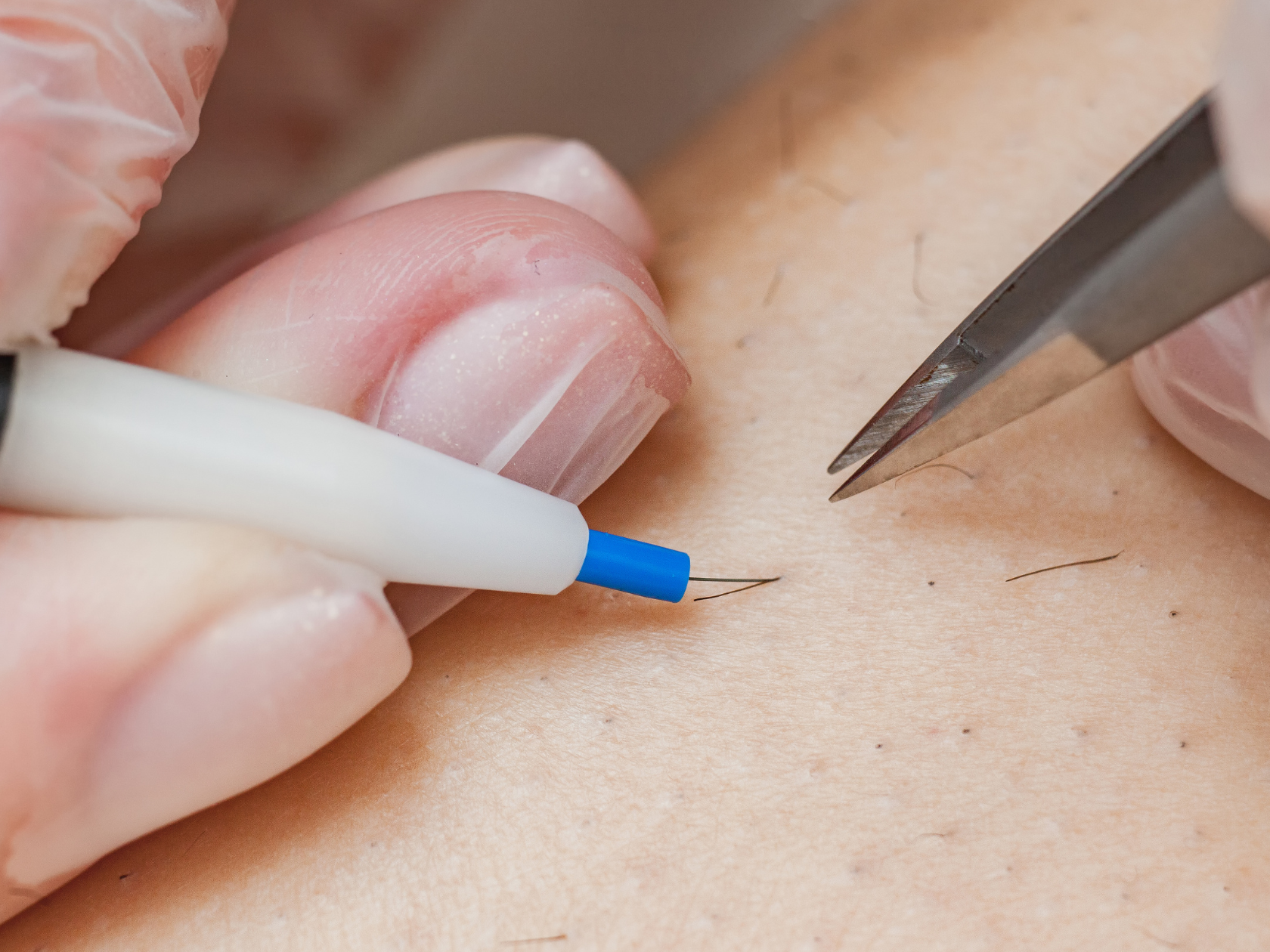
For these areas, Stéphanie recommends thermolysis : a flat-based microfilament is inserted into the follicle, followed by a high-frequency current that coagulates the cells responsible for regrowth, one hair at a time. According to her, it is "the most life-changing technique for cases of hormonal hair growth." It works on all skin types and on light-colored hair. We explain everything in our article on electrolysis and thermolysis hair removal.
Timelines to keep in mind from the start
For those with PCOS, Stéphanie provides a heads-up during the initial consultation: results will be slower to appear.
- For a face without hormonal issues, you can generally expect 12 to 18 months.
- With PCOS, you should plan for about 24 months.
"That doesn't mean there won't be results: we see incredibly impressive and wonderful outcomes in PCOS cases." However, the hormonal environment continues to "trigger" new hair growth, and the chin, in her words, is a "hormonal anthill." Initially, sessions are often weekly, then they become less frequent.
This is also whyaddressing the root cause and the hair at the same time generally yields better results: medical treatment slows down growth, while hair removal eliminates what is already there.
Throughout the treatment, the initial consultation and follow-up appointments allow for adjustments to the protocol: a change in hormonal medication, pregnancy, or a period of stress can alter hair growth, and therefore the frequency of sessions.
What about reimbursement?
This is a common question. Coverage for permanent hair removal by the national health insurance system is very limited and depends on individual circumstances. Talk to your doctor and check with your private health insurance provider: some offer coverage packages for this type of treatment.
Other PCOS-related hair issues: what about hair loss?
Paradoxically, the same androgen hormones can cause hair loss on the top of the scalp. If you are experiencing both excess hair growth and hair loss, mention it to your doctor: it is an additional indicator of excess androgens, and treating the underlying cause can help with both.
The experience of living with PCOS
Beyond the physical hair growth, there is the emotional toll. Stéphanie has seen women cry during consultations because it was the first time they had ever spoken about it. She describes the concealment techniques and the fear that others are looking at your chin instead of your eyes. "We don't have control over our hormones," she reminds us.
If you are going through this, you are not alone. And keeping your hair is also a legitimate choice: the important thing is that it is your choice.
Discover the episode with Stéphanie Prudhomme
Find all our content at PCOSand our article onexcessive hair growth in women.
Discover the Reflet PCOS / PCOD journey
Key takeaways
- PCOS (or PCOD) affects 5 to 15% of women and accounts for 80 to 90% of hirsutism cases.
- Excess androgens stimulate hair growth in hormone-dependent areas: the chin, face, areolas, and the line on the stomach.
- Diagnosis is made with a doctor, and treating the underlying cause slows down the growth of new hair.
- Laser treatment is not recommended for these areas; thermolysis is the preferred method.
- With PCOS, you should expect about 24 months of thermolysis for the face, with very good results.
FAQ
Why does PCOS cause hair growth?
Because it is often accompanied by an excess of androgen hormones, which stimulate hair in hormone-sensitive areas.
Does PCOS-related hair disappear with treatment?
Medical treatment can reduce the growth of new hair, but it acts slowly and does not eliminate hair that is already present. Permanent hair removal complements the treatment plan.
Can you use laser treatment with PCOS?
In hormone-dependent areas like the chin, it is not recommended because there is a risk of paradoxical hair growth. In classic areas like the legs, it is possible.
How long does it take to get rid of PCOS-related hair?
With thermolysis, you should expect about 24 months for the face, with frequent sessions at the beginning.
Does inositol reduce PCOS-related hair?
Some women use it as part of their PCOS management. Ask your doctor or pharmacist for advice before starting any supplement.
The information in this article is for informational purposes only and does not replace the advice of a healthcare professional. Stéphanie Prudhomme is a permanent hair removal practitioner and trainer; she is not a healthcare professional. The diagnosis and treatment of PCOS are the responsibility of a doctor. The plants and supplements mentioned have their own contraindications: seek advice before taking them, especially if you are pregnant or currently undergoing treatment.
Why does PCOS cause hair growth?
Programs that could help

Les Séries Santé recommandés

Do we freeze our oocytes?
Le Rubis is the first podcast dedicated to egg freezing. I answer all your questions about this journey, I wonder about the emotional impacts of this approach and I give you the keys to take action , as long as it's your choice! If you asked yourself the question Once in your life, Le Rubis is made for you. Available only in French speaking.
I discover the Ruby