Chin hair in women: causes and solutions
Chin hair affects far more women than you might think, and it is often a secret struggle. Stéphanie Prudhomme, founder of Dermalyse, explains where it comes from, the mistakes to avoid, and the most lasting solution.


Melisande
Founder of Reflet 🫶
Publié le16.10.2026 Modifié le27.11.2026
A few coarse hairs you can feel under your fingertips. Tweezers always within reach, in the bathroom and in your bag. The reflex to check the rearview mirror before a date. If this sounds familiar, know one thing: you are far from alone.
Stéphanie Prudhomme, founder of Dermalyse, a clinic specializing in permanent hair removal in Chessy, says it without hesitation: the chin is "the number one area, no question." She has had chin hair herself since she was 21. It was a complex she hid for years, to the point of never even mentioning it to her own mother. It was when she discovered thermolysis at an aesthetics conference and tested it herself at the booth that all the "stars aligned": her personal history, her insecurity, and her professional path.
Why hair grows on the chin
The chin is part of what Stéphanie calls the hormone-dependent areas, like the entire jawline, the chest, and the stomach line. The hair follicles there are sensitive to androgenhormones, such as testosterone, which women also produce in small amounts.
When the balance between these hormones shifts, or when the skin there is more sensitive, fine hairs can become thicker, darker, and coarser.
The most common causes
- PCOS (polycystic ovary syndrome): this is, by far, the leading cause of hormonal hair growth. According to La Revue du Praticien, it is responsible for 80 to 90% of hirsutism cases. See our article PCOS and body hair.
- Perimenopause and menopause : the drop in estrogen alters the balance with androgens. Many women see chin hair appear during this period. Find our content on perimenopause.
- A family predisposition : in some women, no hormonal abnormality is found, but the skin is more reactive to hormones.
- More rarely, other hormonal disorders, or certain medications.
See a doctor promptly if hair appears or increases suddenly in adulthood, or if it is accompanied by other signs: a deeper voice, hair loss, cessation of periods, or significant weight gain.
The first step: finding the cause
Before thinking about hair removal, Meli reminds us in the episode: it is important to look for the cause. A doctor (general practitioner, gynecologist, endocrinologist, or dermatologist) can prescribe a hormonal workup and, if necessary, an ultrasound. If PCOS is diagnosed, medical treatment can reduce the growth of new hair, and supplements or herbal remedies can also be discussed with a professional. We cover everything in our guide on hirsutism.
Addressing the cause and treating the hair are not mutually exclusive: they complement each other.
Mistakes to avoid with chin hair
Using laser on the chin
This is Stéphanie's strongest message: no laser or pulsed light on hormone-dependent areas. In these areas, photoepilation can cause paradoxical hypertrichosisparadoxical hypertrichosis. It stimulates very fine or dormant hairs, which then grow back thicker and more visible than before, sometimes across the entire jawline.
Stéphanie has seen the damage: a woman who had undergone 22 years of laser treatment on her face, repeatedly told that "it was normal and would never stop." And a 23-year-old redhead who was told by a laser clinic to shave her chin to "thicken" the hair before sessions. After two or three sessions, her hair growth had spread to her entire lower face, and it was the clinic itself that eventually referred her for thermolysis.
Wanting quick results
Chin hair is stubborn. Stéphanie describes it as a "hormonal anthill": "the only thing they want to do is come out." No reputable method promises permanent results in just a few sessions.
Hiding and staying isolated
Many women live with this insecurity in secret. Stéphanie has seen clients cry during consultations because it was the first time they had ever spoken about it. She also shares the story of a client married for 32 years who had never dared to tell her husband. The day he found out where she was going, he looked her in the eyes and told her he loved her just as she was.
The long-term solution: thermolysis
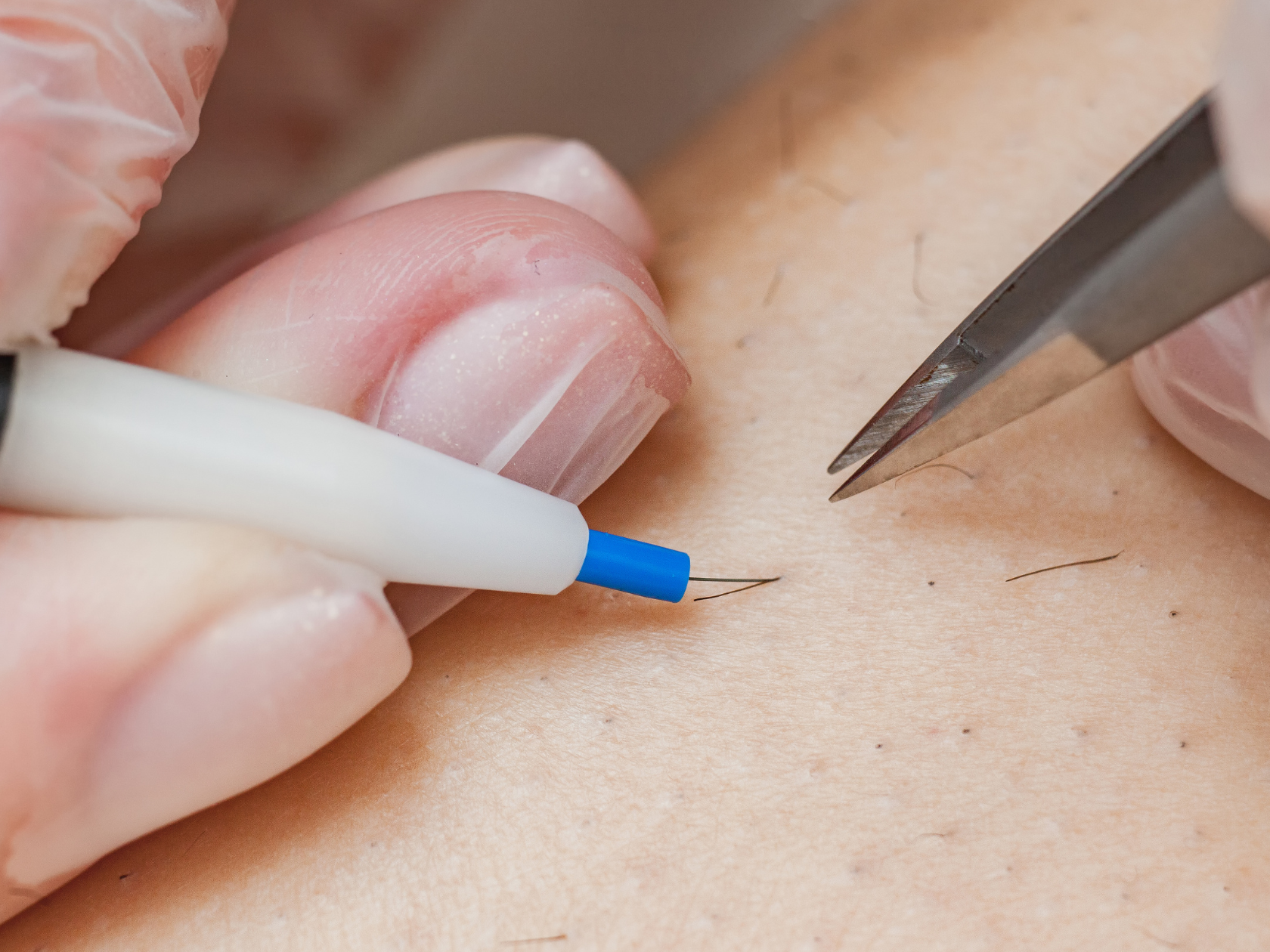
For the chin, Stéphanie recommends thermolysis, a form of electrolysis. The principle: a practitioner inserts a very fine, flat-based microfilament along the hair into the skin's natural opening, then sends a high-frequency current that coagulates the cells responsible for regrowth. The skin is not punctured. Hairs are treated one by one.
Its advantages, according to Stéphanie:
- it is the only method she considers 100% permanent;
- no paradoxical regrowth;
- it works on all skin types, in any season, including on white or light-colored hair, which the laser does not work on.
In fact, this is what saved another one of her clients: as she aged, her chin hairs turned white and her eyesight declined. She could feel them, but could no longer see them to pluck them.
How long does it take for the chin?
This is the point to fully understand before starting:
- At first, sessions are weekly, then they become less frequent as the hair decreases.
- The duration of a session varies depending on the density: a few seconds for a single hair, fifteen minutes for some chins, and up to an hour for others. You can choose to treat only the coarse hairs that bother you, or the peach fuzz as well.
- A full treatment generally lasts 12 to 18 months for a face without hormonal issues, and closer to 24 months in the case of PCOS or other hormonal diagnoses.
Why so long? Because hairs don't all grow at the same time. Stéphanie compares the skin to a mille-feuille: at each session, we treat the hairs that have emerged, while others wait their turn underneath. And only hairs in the growth phase are permanently destroyed. We explain everything in our article on electrolysis and thermolysis hair removal.
During treatment: leave the hair alone
During a thermolysis course, stop using tweezers, wax, threading, and razors: the practitioner needs the hair to be visible in order to treat it. After each session, a soothing cream is applied, and sun protection is essential to prevent dark spots.
In the meantime: how to manage hair on a daily basis
If you haven't started treatment yet, or if you're hesitant, here are a few tips to limit irritation:
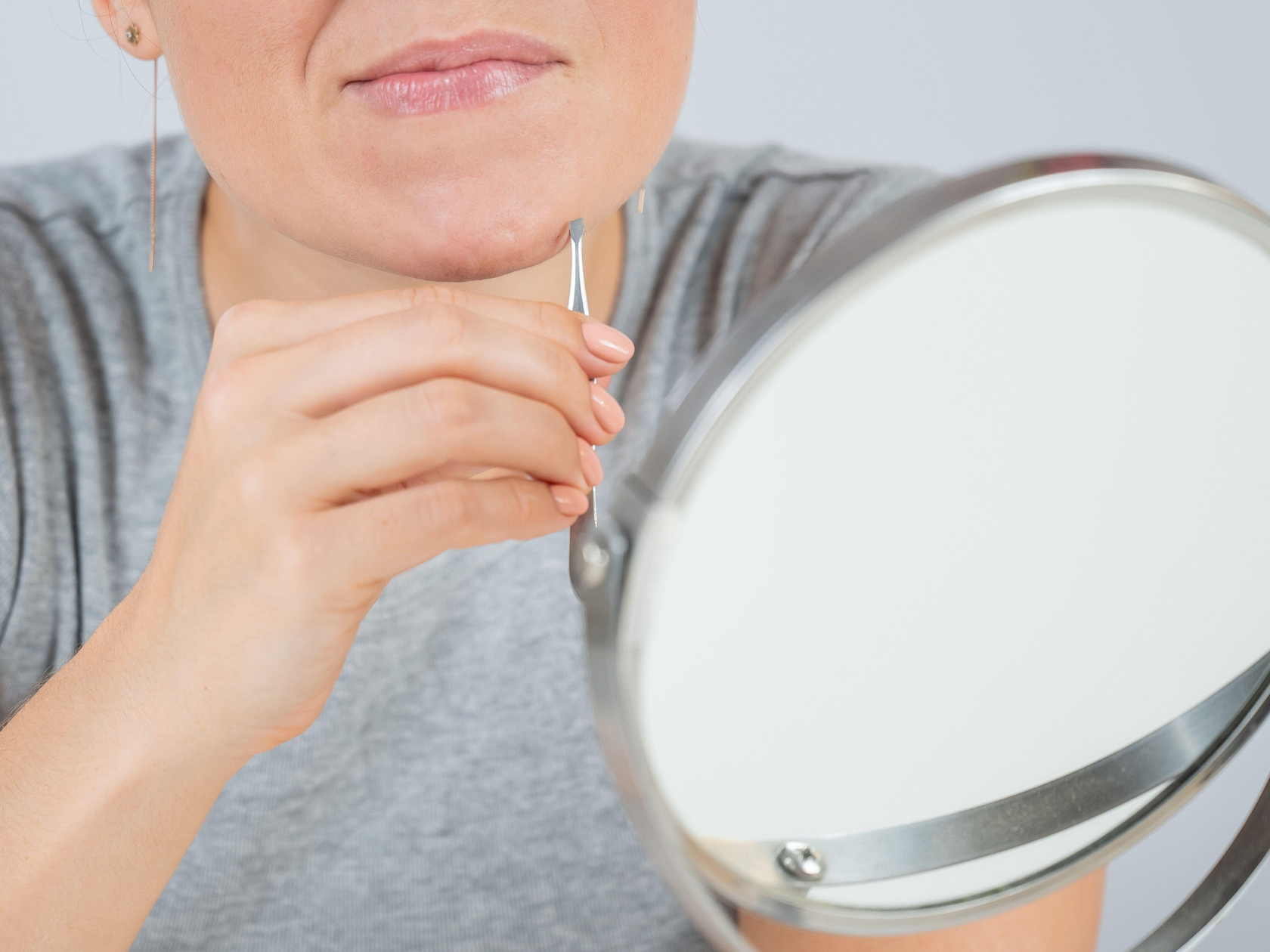
- Tweezing remains the most precise method for a few isolated hairs. Disinfect your tweezers, work on clean skin, and pull in the direction of hair growth.
- Avoid picking at ingrown hairs: you risk leaving marks or small scars.
- Moisturize your skin after hair removal with a soothing treatment.
- Protect yourself from the sun if your skin is irritated, to avoid dark spots.
These steps won't solve the problem in the long run, but they limit the damage while waiting for a lasting solution. And if you plan to start thermolysis, ask your practitioner when you should stop tweezing: they will need to see the hair to treat it.
Men too
Stéphanie also sees a few men, who make up about 2% of her clientele, for beard contouring, between-the-brows, or nape hair removal. For the eye area, thermolysis has a distinct advantage: laser treatment is not performed there because it is too dangerous for the eyes.
What about during pregnancy?
As a precaution, Stéphanie does not perform thermolysis during pregnancy. In such cases, she recommends returning to your previous hair removal method (tweezing, waxing, etc.). In any event, pregnancy causes significant hormonal shifts: hair may appear and then fall out on its own afterward, making sessions largely ineffective.
Discover the episode with Stéphanie Prudhomme
To learn more, read our article on excessive hair growth in womenand find our content onPCOS.
Discover the Reflet PCOS / PCOD journey
Key takeaways
- The chin is the area most affected by hormonal hair growth, and many women experience this in secret.
- The most common causes are PCOS and perimenopause: a medical check-up can help clarify the situation.
- Laser and intense pulsed light (IPL) should be avoided on the chin due to the risk of paradoxical hypertrichosis.
- Thermolysis treats hair one by one without the risk of paradoxical growth, and it is also effective on white hair.
- You should expect 12 to 18 months of treatment, or closer to 24 months in cases of PCOS.
FAQ
Why do I have hair on my chin?
The chin is an area sensitive to androgen hormones. Coarse hair there is often linked to PCOS or perimenopause, and sometimes to a genetic predisposition.
Should I be worried about a few hairs on my chin?
Not necessarily. However, if there are many, if they are increasing, or if they are accompanied by other symptoms (irregular periods, acne, hair loss), a medical check-up is recommended.
Is laser effective on the chin?
It is not recommended for this hormone-dependent area because it can trigger paradoxical growth, resulting in hair that is denser than before.
What is the best solution for chin hair?
Treating the underlying cause with a doctor and using a method suited to hormonal areas, such as thermolysis, for existing hair.
Can white chin hair be removed?
Yes, with thermolysis, which treats hair regardless of its color. Laser, on the other hand, does not work on white or very light hair.
The information in this article is for educational purposes only and does not replace professional medical advice. Stéphanie Prudhomme is a permanent hair removal practitioner and trainer; she is not a healthcare professional. To investigate the cause of your hair growth, please consult your doctor.
Why do I have chin hair?
Programs that could help

Les Séries Santé recommandés

Do we freeze our oocytes?
Le Rubis is the first podcast dedicated to egg freezing. I answer all your questions about this journey, I wonder about the emotional impacts of this approach and I give you the keys to take action , as long as it's your choice! If you asked yourself the question Once in your life, Le Rubis is made for you. Available only in French speaking.
I discover the Ruby