Medicinal plants and medication: can they be taken together?
Taking plants is not in opposition to taking medication, provided you know which combinations to avoid. Kelly Colonges, a doctor of plant biology and herbalist, explains how plants and treatments can interact and how to combine them safely.

Melisande
Founder of Reflet 🫶
Publié le16.10.2026 Modifié le06.11.2026
"Taking plants doesn't necessarily mean opposing medication. They can be completely complementary, and complementarity is great." This quote from Kelly Colonges, a doctor of plant biology and herbalist, perfectly summarizes the Reflet approach. Plants and medication are not two opposing camps. But to combine them safely, you need to know how they can interact.
In this article, we explain what an interaction is, which plants require the most vigilance, and the best practices to adopt before adding a plant to your treatment.
Why a plant can interact with medication
A medicinal plant contains active ingredients, just like a medication. In fact, many medications were born from the study of active plant ingredients. These molecules circulate in your body, pass through your liver, and act on specific targets. When you take a plant and a medication at the same time, they can therefore interfere with or amplify each other.
There are two main types of interactions:
- Interactions that change the amount of medication in your body. The plant changes how the medication is absorbed, processed by the liver, or eliminated. As a result, there is too much or not enough medication in your bloodstream.
- Interactions that change the effect of the medication. The plant acts in the same direction (strengthening the effect) or in the opposite direction (partially canceling it out).
The most well-known example: St. John's wort
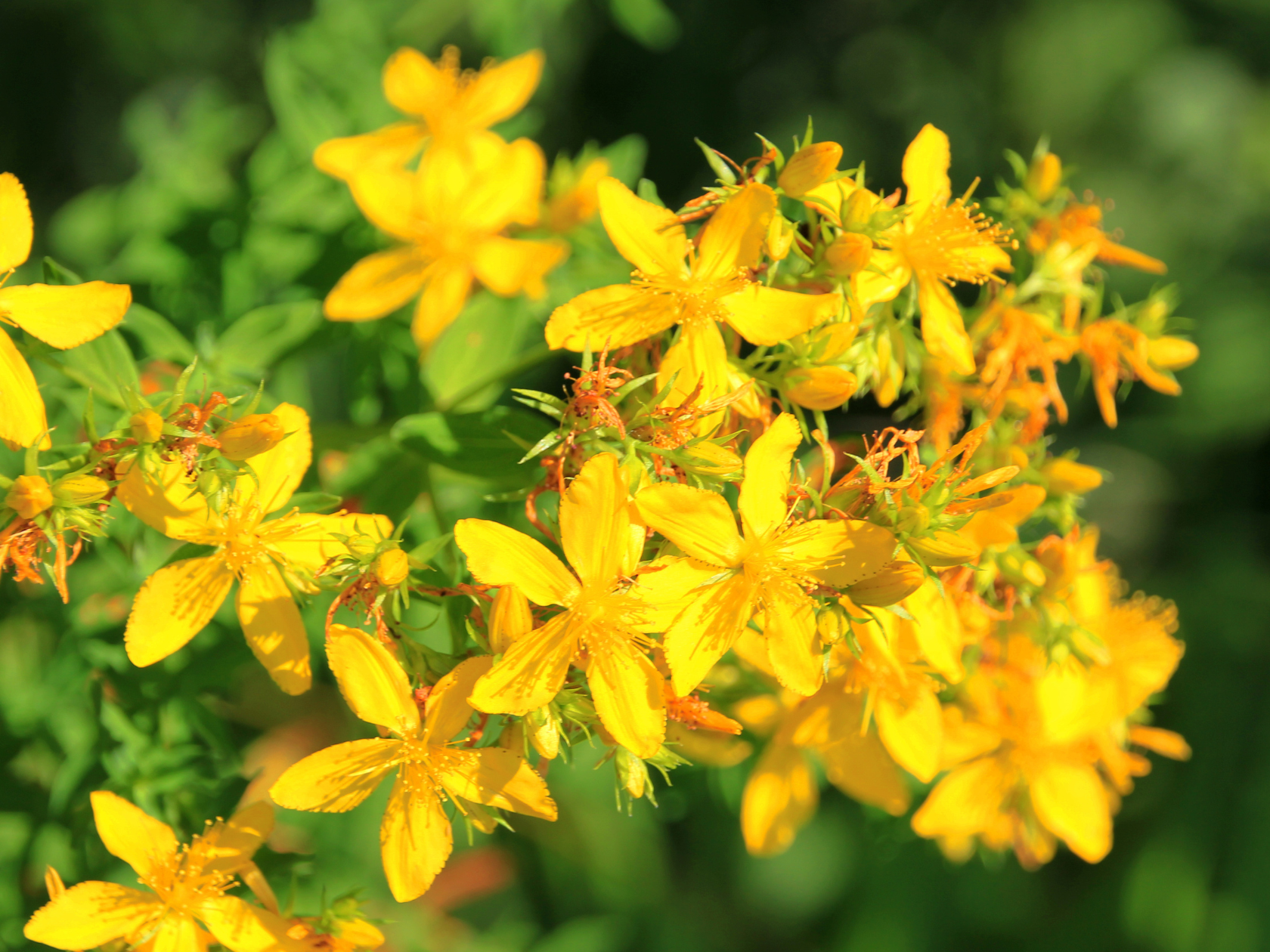
Kelly mentions it spontaneously: St. John's wort is one of the only plants mentioned on the leaflets of certain medications. It accelerates a liver mechanism that breaks down medications, making them less effective. This is the case with the pill: official leaflets recommend using another form of contraception when taking St. John's wort. We detail everything in our article on St. John's wort.
Situations requiring extra vigilance
Not all plants carry the same level of risk. Some, like fig or walnut buds according to Kelly, are considered relatively safe. Others require special caution. Here are the most common situations.
This table provides examples and is not exhaustive. For a comprehensive overview, Anses has published a list of precautions, contraindications, and potential interactions for 118 medicinal plants used in dietary supplements, intended primarily for healthcare professionals.
Plants that should not be mixed
Interactions aren't limited to medications. Combining several plants that act in the same way can also amplify their effects. This is the case, for example, if you combine several sedative plants in the evening or several plants rich in phytoestrogens during menopause.
This is one of the reasons why every new combination of plants sold as a supplement must be specifically declared in France. As Kelly explains, even if two buds have been declared separately, mixing them into a new product requires a new declaration.
Pregnancy, breastfeeding, and children: special circumstances
Certain life stages require even greater caution, even if you are not currently undergoing treatment.
- During pregnancy, many plants are not recommended due to a lack of sufficient data, and extracts containing alcohol (gemmotherapy, tinctures) should be avoided. Kelly notes this for linden and California poppy. Plants containing phytoestrogens, such as soy supplements, are also discouraged.
- During breastfeeding, some active ingredients pass into breast milk. The timing of intake can matter: talk to your midwife, doctor, or a lactation consultant about it.
- For children, extracts containing alcohol should not be given before age 3, and adult doses should never be used as is.
In these situations, the rule is simple: no plants without professional advice, even if they are considered gentle.
Questions to ask before buying
Whether you are at a pharmacy, an herbalist shop, or on a website, these questions will help you make the right choice:
- Is this plant compatible with my current treatments? List all your medications, including the pill.
- Which part of the plant is used, and in what form? The flowering top, the root, and the bud do not have the same effects.
- What is the dosage, and for how long? A treatment course has a beginning and an end.
- Are there any contraindications related to my medical history? Hormone-dependent cancer, or liver, kidney, or thyroid issues, for example.
- What should I do if I experience an unusual effect? A good advisor will tell you when to stop and who to consult.
If the person you are talking to cannot answer, that is a red flag: seek advice elsewhere. Kelly makes this choice herself: she only sells her extracts in herbal shops where the staff is trained.
The golden rule: never stop taking medication for a plant
This is the message Kelly insists on the most. "A plant does not replace medication. And above all, never listen to people who tell you to stop taking a medication to replace it with a plant."
With the internet and AI, she sees more and more clients arriving at the counter with a pre-made protocol. Her reflex is always the same: ask where the recommendation came from, then review it together. Some of these protocols are, in her view, completely absurd or even dangerous.
Another little-known point: stopping a plant abruptly can also cause problems. With St. John's wort, for example, stopping suddenly can cause the concentration of a medication in the blood to spike. If you are already taking a plant alongside a treatment, talk to your doctor before changing anything.
Good habits before combining a plant with a treatment
- Report all your plants and supplements to your doctor and pharmacist, including herbal teas and drops. We tend to forget them because they are "natural."
- Seek advice before starting, especially if you are taking hormonal contraception, anticoagulants, hormone therapy, or any long-term treatment.
- Choose a place where you can get advice : a pharmacy or herbalist shop with a team trained in drug interactions.
- Read your medication leaflets : some plants are mentioned there.
- Report any unusual effects. You can report an adverse effect related to a supplement on the Anses nutrivigilance portal.
The winning duo: doctor and herbalist
Kelly is fortunate to work with a pharmacist and a health center where doctors practice. For her, this dialogue between healthcare professionals and herbalists is "a real asset" for clients. This is exactly what we stand for at Reflet: plants have their place alongside medicine, but never in its place.
In practice, this duo works when everyone knows their role. The doctor makes the diagnosis, prescribes, and monitors the treatment. The pharmacist checks for interactions. A trained herbalist helps you choose the right plant, at the right dosage, and for the right duration. And you act as the link between them by telling each one what you are taking. It’s simple, but it’s what makes combining plants and medication truly safe.
To learn more, discover our guide to medicinal plants, our article on phytoestrogens and the one on herbs for sleep. You can also find our content on the cycleand onmenopause.
Discover the episode with Kelly Colonges
Key takeaways
- Plants and medications can complement each other, but some combinations can alter the effect of your treatment.
- St. John's wort is the most well-known example: it can make the pill less effective, among other things.
- Phytoestrogens, sedative plants, and long-term treatments require special vigilance.
- Never replace a medication with a plant, and never stop taking a plant abruptly without professional advice.
- The best practice is to tell your doctor and pharmacist about all the plants you use.
FAQ
Can you take medicinal plants with medication?
Often yes, but not always. Some plants can change how medications work. Ask your pharmacist or doctor for advice before combining them.
Which plants interact with the pill?
St. John's wort is the most well-known: it can reduce the effectiveness of hormonal contraception. If you are unsure about any other plant, ask your pharmacist for advice.
Can herbal teas interact with medication?
Yes, some plants are a concern even in herbal teas, such as St. John's wort. Be sure to mention the herbal teas you drink to your doctor as well.
Can I stop my medication if the plants are working?
No. Never stop a treatment without your doctor's advice, even if you feel better.
Where can I report an adverse effect related to a plant?
On the Anses nutrivigilance portal for dietary supplements, or by contacting your doctor or pharmacist.
The information in this article is for educational purposes only and does not replace professional medical advice. Kelly Colonges holds a PhD in plant biology and is an herbalist; she is not a healthcare professional. Always consult your doctor or pharmacist before combining any plant with a medical treatment.
Can you take medicinal plants with medication?
Programs that could help
Les Séries Santé recommandés


Do we freeze our oocytes?
Le Rubis is the first podcast dedicated to egg freezing. I answer all your questions about this journey, I wonder about the emotional impacts of this approach and I give you the keys to take action , as long as it's your choice! If you asked yourself the question Once in your life, Le Rubis is made for you. Available only in French speaking.
I discover the Ruby