St. John's wort: benefits, risks, and drug interactions
A traditional plant for mood, St. John's wort is also one of the few plants mentioned on medication package inserts. Kelly Colonges, a doctor of plant biology, explains why it accelerates their breakdown and how to protect yourself.

Melisande
Founder of Reflet 🫶
Publié le16.10.2026 Modifié le03.11.2026
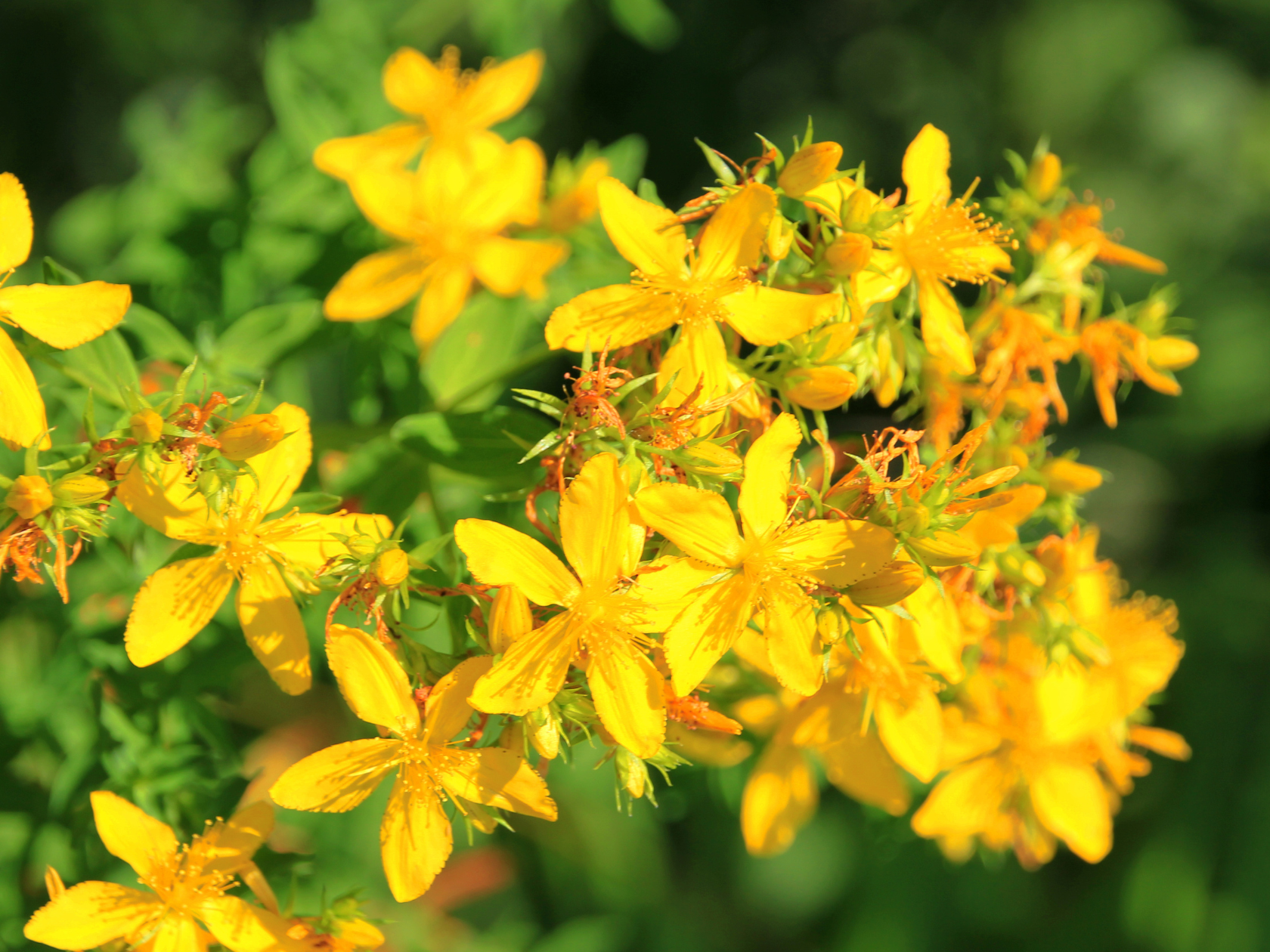
Small yellow flowers, a reputation as a "mood-boosting plant," sold in capsules, herbal teas, or oils: St. John's wort seems like a gentle and harmless plant. Yet, it is one of the plants that requires the most caution. Kelly Colonges, a doctor of plant biology and herbalist, reminds us of this in her Reflet episode: it is even one of the only plants explicitly named on the package inserts of certain medications, with a clear message: do not take St. John's wort while on this treatment.
If you take the pill, are on long-term medication, or are considering a course of treatment for your mood, this article is for you.
What is St. John's wort?
St. John's wort (Hypericum perforatum) is a perennial plant with yellow flowers, very common in Europe. We mainly use its flowering tops, which are the upper parts of the plant in bloom. Its name comes from the small translucent glands on its leaves, which make them look like they are pierced with "a thousand holes" when held up to the light.
It is available in several forms:
- In capsules or tablets, sometimes as a plant-based medication sold in pharmacies.
- In herbal tea or alcohol-based extract (tincture).
- As an oily macerate, the famous "red oil," used on the skin.
These forms carry very different risks: we will cover that below.
The benefits of St. John's wort
St. John's wort is traditionally used to help with temporary low moods and mild anxiety. It is, in fact, one of the most studied medicinal plants on this subject. When used externally, its oily macerate is traditionally used to soothe the skin.
This does not mean that St. John's wort replaces antidepressants or medical supervision. Persistent sadness, loss of interest, or ongoing sleep disturbances warrant a consultation: only a healthcare professional can assess the situation and offer you appropriate support.
If you are going through a difficult time, do not hesitate to talk to your doctor. And if you feel you are in danger, call 3114, the national suicide prevention hotline, which is free and available 24/7.
Why is St. John's wort dangerous with certain medications?
Kelly explains it in simple terms: St. John's wort speeds up a liver mechanism used to eliminate medications. As a result, medications are broken down faster and become less effective.
Official product leaflets describe this mechanism more precisely: St. John's wort stimulates liver enzymes (from the cytochrome P450 family) as well as a transport protein. And this effect does not stop immediately: according to the summaries of product characteristics published by the ANSM, the effect of St. John's wort on these enzymes can persist for a week after stopping use.
St. John's wort and the pill: the most overlooked risk
This is the interaction that affects the most women, and it is still not widely known. The leaflets for St. John's wort-based medications are clear: if taken with hormonal contraception, you must use another form of birth control, because St. John's wort reduces the effectiveness of the progestin.
In short, when taking St. John's wort, your pill may no longer protect you effectively against pregnancy. This applies to the pill, but also to other hormonal contraceptives. In the United Kingdom, The drug regulatory agency has already issued warnings regarding unintended pregnancies linked to this interaction, and the ANSM had issued warnings as early as 2000.
Other medications involved
The list is long. Among the treatments most frequently cited in patient information leaflets:
- les anticoagulants such as vitamin K antagonists;
- la digoxin (heart);
- certains antiretrovirals (HIV);
- certains immunosuppressants (transplants);
- certains anticancer drugs ;
- certains antiepileptics ;
- certains antidepressants, with which the combination can also cause other issues.
This list is not exhaustive. The only golden rule: if you are taking any medication at all, ask your pharmacist or doctor before taking St. John's wort.
Do not stop taking it abruptly if you are on medication
This is a little-known trap. If you are already taking St. John's wort alongside a treatment, stopping it suddenly can cause the concentration of the medication in your blood to spike. Product leaflets recommend not stopping abruptly and having the effectiveness or dosage of the medication checked both before and after stopping. Talk to your doctor, who will manage the process of stopping it.
Why is there so little talk about these interactions?
If St. John's wort is so well known to pharmacists, why are so few women aware of it? There are several reasons.
First, it is sold in many different forms: as a herbal medicine in pharmacies, as a dietary supplement, in herbal teas, and in drops. When you buy loose-leaf herbal tea, there is no leaflet to warn you. Second, we rarely think to mention a plant to our doctor. We think of "treatment" when it comes to medication, but much less so when it comes to a tea or a few drops.
Finally, the effect of St. John's wort on the pill is invisible. You don't feel anything in particular: your contraception is simply less reliable. That is precisely what makes this interaction so tricky. At her herbal shop counter, Kelly also sees more and more people arriving with protocols found online or generated by AI, with no mention of these precautions. Her rule: ask where the advice came from, and go over everything together.
If your doctor gives you the green light
St. John's wort is not off-limits for everyone. If you are not taking any medication, do not use hormonal contraception (or have chosen another form of birth control), and your doctor or pharmacist approves, a few guidelines will help you choose it wisely:
- Opt for a product with a precise, controlled dosage, such as a herbal medicine sold in a pharmacy, rather than a mixture with an unknown concentration.
- Follow the recommended duration of the course and check in with your doctor if your mood does not improve.
- Avoid combining multiple products that contain it, such as a "mood" supplement and an herbal tea.
- Inform all your healthcare providers that you are taking it, including your dentist or anesthesiologist in the event of a procedure.
Other precautions regarding St. John's wort
- Pregnancy and breastfeeding : to be avoided, due to insufficient data.
- Children : St. John's wort-based medications are for adults only.
- Sun : St. John's wort is known to make the skin more sensitive to the sun. Avoid prolonged exposure and UV rays while taking it.
- Surgery : inform your medical team if you have an operation scheduled, due to potential interactions with certain anesthesia products.
- Severe mood disorders : St. John's wort is not suitable. Medical supervision is required.
What about St. John's wort oil on the skin?
St. John's wort oil macerate, when applied to the skin, does not raise the same interaction concerns as the plant taken orally in capsules or herbal teas: it is primarily the flowering tops taken by mouth that are the issue. Two precautions still apply: do not expose yourself to the sun after application, and perform a patch test on a small area if you have sensitive skin.
"Natural" does not mean "interaction-free"
St. John's wort is the perfect example of an idea that Kelly defends throughout her episode. We tend to think that because it's a plant, it's harmless. "There are actually quite a few plants that have contraindications and can interact with medications. So you have to be very careful. We don't take plants lightly, and we don't recommend plants lightly either."
Conversely, not all plants are as delicate. Kelly cites fig or walnut gemmotherapy, for example, which she uses herself for digestive comfort and which are considered among the safer plants. That is the whole point of good advice: knowing which plants require special vigilance and which are suitable for most people.
To learn more about this topic, read our article on medicinal plants and medications.
Are you concerned about your mood or sleep?
Stress and sleep are, by far, the topics Kelly hears about most often at her herbal shop counter. If this applies to you, other plants exist, with different precautions: we present them in our article on herbs for sleep. And for an overview, check out our guide to medicinal plants and our content on the cycle.
Discover the episode with Kelly Colonges
Key takeaways
- St. John's wort is traditionally used for mood and mild anxiety, but it is not a substitute for medical supervision.
- It accelerates the breakdown of many medications by the liver, making them less effective.
- If you are using hormonal contraception, you must use an alternative method of birth control.
- Its effect on the liver can last for a week after stopping, and you should not stop it abruptly if you are taking other medication.
- Before starting any treatment, talk to your pharmacist or doctor.
FAQ
Can you take St. John's wort with the pill?
It is not recommended. St. John's wort can make hormonal contraception less effective. Product labels recommend using an alternative method of contraception if you are taking it.
How long does the effect of St. John's wort last after stopping?
According to official product labels, its effect on liver enzymes can persist for about a week after the last dose.
Does St. John's wort replace an antidepressant?
No. It is traditionally used for temporary dips in mood. Depression requires medical supervision, and you should never stop a treatment to replace it with a plant.
Is St. John's wort oil dangerous?
When applied to the skin, it does not carry the same risks of interaction as the ingested plant. Just avoid sun exposure after application.
Does St. John's wort cause sun sensitivity?
Yes, it is known to make the skin more sensitive to the sun. Limit sun exposure while taking it.
The information in this article is for educational purposes only and is not a substitute for professional medical advice. Kelly Colonges holds a PhD in plant biology and is an herbalist; she is not a healthcare professional. Do not take St. John's wort without consulting your doctor or pharmacist, especially if you are using hormonal contraception, are currently on medication, or are pregnant or breastfeeding.
Can you take St. John's wort with the pill?
Programs that could help
Les Séries Santé recommandés
Do we freeze our oocytes?
Le Rubis is the first podcast dedicated to egg freezing. I answer all your questions about this journey, I wonder about the emotional impacts of this approach and I give you the keys to take action , as long as it's your choice! If you asked yourself the question Once in your life, Le Rubis is made for you. Available only in French speaking.
I discover the Ruby