Phytoestrogens: what are they and who are they risky for?
Phytoestrogens are plant molecules that mimic our estrogen. While useful for some women during menopause, they are contraindicated for others. Kelly Colonges, a doctor of plant biology, helps you get the facts.


Melisande
Founder of Reflet 🫶
Publié le16.10.2026 Modifié le08.11.2026
You may have already read "contains phytoestrogens" on a box of menopause supplements, or heard that soy "disrupts hormones." Between the promises and the concerns, it’s hard to know what to believe. Kelly Colonges, a doctor of plant biology and herbalist, sees these questions every day at the counter: menopause and hot flashes are the women's health topics she is most often confided in about, and the ones for which women most frequently feel they have no solutions.
Here is what you need to know before taking a plant rich in phytoestrogens.
Phytohormones and phytoestrogens: definition
A phytohormoneis a molecule produced by a plant that closely mimics a human hormone. The most well-known are phytoestrogens, which imitate the action of our estrogen, the female hormones.
Their effect is much weaker than that of our own estrogen or hormone replacement therapy. However, it is not negligible: this is precisely why they can relieve certain menopause symptoms, and why they are contraindicated in certain situations.
Why phytoestrogens are of such interest to women going through menopause
To understand their popularity, we need to look at what happens in the body. As menopause approaches, during perimenopause, estrogen production becomes irregular—like a rollercoaster—before eventually declining. These fluctuations are what trigger many of the symptoms: hot flashes, sleep disturbances, vaginal dryness, joint pain, and mood swings.
The idea behind phytoestrogens is simple: provide a molecule that mimics, albeit more weakly, the action of the estrogen that is lacking. This is why sage or hops appear in so many "menopause" supplements; Kelly describes them as the go-to plants, the classics for this type of issue.
But this logic has a downside. If a plant mimics estrogen, it can also stimulate estrogen-sensitive tissues. And that is exactly what we want to avoid in a woman who has had hormone-dependent cancer. Hence the rule Kelly repeats: a plant containing phytoestrogens inevitably comes with contraindications.
Which plants contain phytoestrogens?
The most frequently cited:
- Soy, rich in isoflavones, which has been the subject of much discussion;
- Sage, a classic for hot flashes;
- Hops;
- Red clover.
Other plants raise questions without the presence of phytoestrogens being proven. Kelly cites the example of apple tree buds, traditionally used for hot flashes: "We don't currently have scientific proof of the presence of phytoestrogens, but since it seems to behave in the same way, as a precaution, there is a contraindication." In other words, some plants may have a hormonal effect that we don't yet understand: when in doubt, we apply the same precautions.
Sage in your stew is not the problem
It's a common confusion, and Kelly clears it up with a smile. Because we use sage in cooking, the general public has trouble taking it seriously. A sage leaf simmering in a dish is not a problem. It is the concentrated extracts, in capsules, drops, or supplements, that require caution.
That is the whole difference between a food and a supplement: the dose. An extract concentrates the active ingredients far beyond what is found on your plate.
For whom are phytoestrogens risky?
"If you have a plant that contains phytoestrogens, you inevitably have contraindications," summarizes Kelly. Supplements rich in phytoestrogens should be avoided in these situations:
- Personal history of hormone-dependent cancer, such as certain breast or endometrial cancers;
- Family history of hormone-dependent cancer: talk to your doctor before taking any supplements;
- Hormonal conditions (endometriosis, fibroids, certain thyroid conditions, etc.): seek medical advice;
- Current hormone therapy, to avoid cumulative effects;
- Pregnancy and early childhood.
Regarding soy, ANSES has applied a precautionary principle since 2005: it advises against its consumption during pregnancy, for children under 3 years old, and in cases of personal or family history of breast cancer. Research into the effects of dietary soy is ongoing, and its conclusions are nuanced. However, when it comes to concentrated supplements, caution remains the best approach.
At Reflet, we reiterate this in almost all our series (fertility, PCOS, endometriosis, menopause): if you have a history of hormone-dependent cancer, do not make any decisions on your own. Get professional guidance.
Phytoestrogens or hormone therapy?
This is a question that comes up often, and there is no single answer. Hormone replacement therapy for menopause should be discussed with a gynecologist or doctor, who will evaluate your situation, your medical history, and your symptoms. Phytoestrogens are not a "natural" and equivalent version of hormone therapy: their action is weaker, and the level of evidence varies depending on the plant.
Some women cannot take hormone therapy, while others choose not to. In any case, the ideal approach is to talk to your doctor before turning to a supplement, so you can choose an option that truly suits you. We cover these questions in detail in our content on perimenopauseand onmenopause.
What if I can't take phytoestrogens?
Good news: there are options without phytohormones. At the counter, Kelly is often asked for advice by women affected by cancer. After conducting bibliographic research, she suggests a combination of two tinctures:
- holy basil (tulsi), an adaptogenic plant traditionally used to help the body better adapt to stress, with anti-inflammatory and antioxidant properties;
- sweet clover, traditionally used for venous and lymphatic circulation, and known for its effect on hot flashes.
These plants also come with their own precautions. Sweet clover, for example, requires extra caution if you are on anticoagulant medication. Once again, ask your doctor or pharmacist for advice before starting.
This protocol is not a one-size-fits-all solution. Kelly repeats this throughout her episode: what works for one woman doesn't necessarily work for another. Symptoms, their intensity, medical history, and current treatments change everything. That is why she always takes the time to ask questions before recommending a plant, and why she works in conjunction with a pharmacist and doctors.
For other non-hormonal options (cryotherapy, stress management, targeted supplements), read our guide on plants for hot flashes.
How to spot phytoestrogens on a label
They aren't always clearly labeled. On the ingredient list, look specifically for:
- isoflavones,soy extract or soy germ;
- sage (Salvia officinalis) ;
- hops (Humulus lupulus) ;
- red clover or meadow clover (Trifolium pratense) ;
- flax (lignans), which also contains compounds from the same family.
Conversely, some brands highlight "phytohormone-free" formulas, designed for women who cannot or do not wish to take them. This formulation choice broadens the range of women who can use these products, but they also come with their own precautions for use. We discuss this in our article on food supplements during perimenopause.
Key tips before taking a "menopause" supplement
- Read the ingredients : sage, hops, red clover, and soy (isoflavones) indicate the presence of phytoestrogens.
- Check your medical history, both personal and family, and discuss it with your doctor.
- Do not combine multiple products containing phytoestrogens, and do not take them with hormone replacement therapy.
- Seek advice from a trained professional: a pharmacist, doctor, midwife, or herbalist.
To learn more, check out our guide to medicinal plants and our article on medicinal plants and medications.
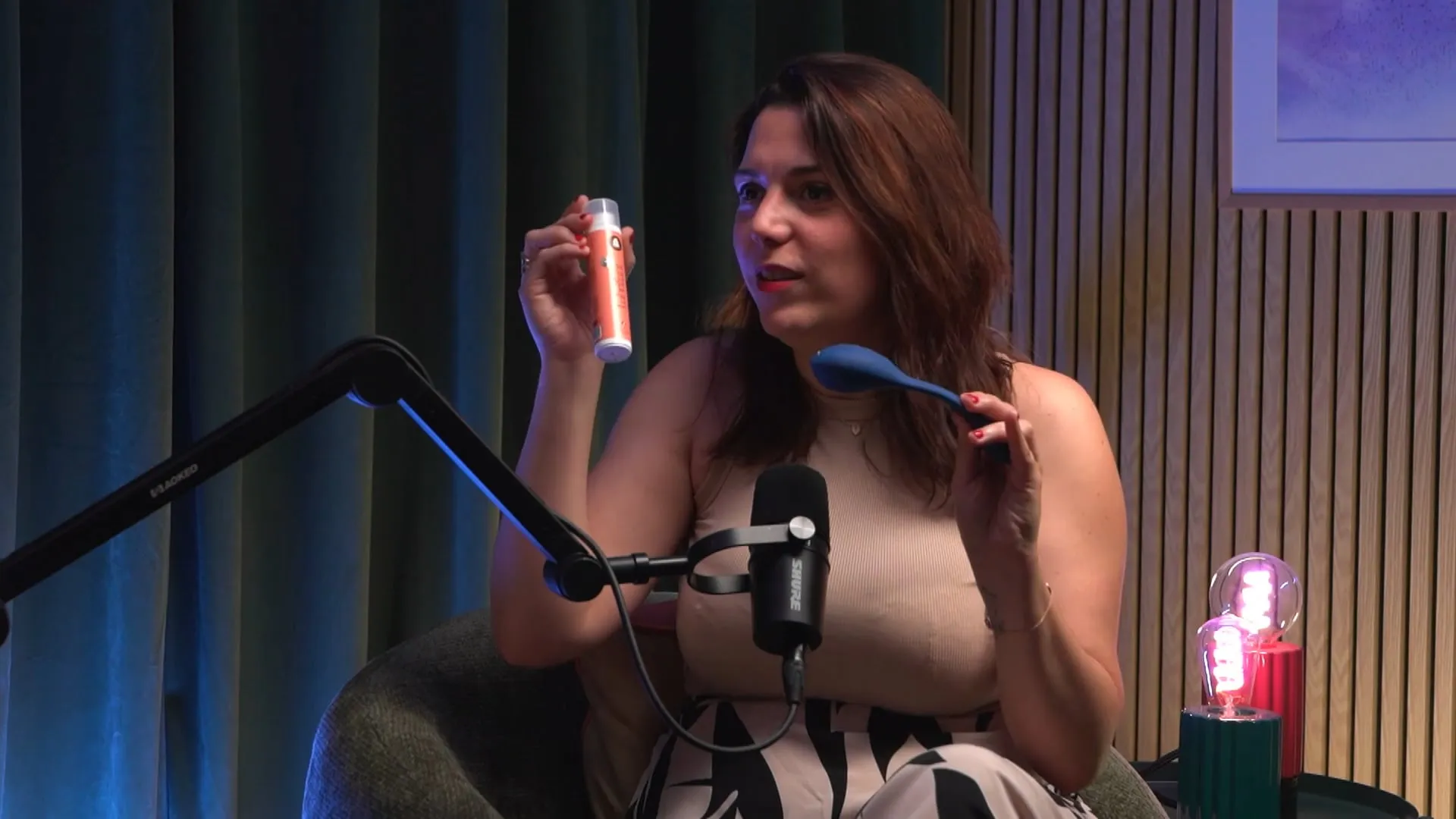
Discover the episode with Kelly Colonges
Key takeaways
- Phytoestrogens are plant-based molecules that mimic our own estrogen, though with a weaker effect.
- They are primarily found in soy, sage, hops, and red clover.
- Using sage in cooking is perfectly fine; it is the concentrated extracts that require caution.
- They should be avoided if you have a history of hormone-dependent cancer, hormonal disorders, are pregnant, or for young children.
- Alternatives without phytohormones do exist, such as a combination of holy basil (tulsi) and sweet clover, always with professional guidance.
FAQ
What is a phytoestrogen?
It is a molecule produced by a plant that mimics the action of estrogen, the female hormone. Its effect is weaker than that of our own hormones.
Which plants contain phytoestrogens?
Mainly soy, sage, hops, and red clover. Other plants, such as apple bud, are also contraindicated as a precaution in the same situations.
Who should avoid taking phytoestrogens?
Women with a personal history of hormone-dependent cancer, and as a precaution, those with a family history, a hormonal condition, those currently undergoing hormonal treatment, or those who are pregnant. Ask your doctor for advice.
Is eating soy dangerous?
ANSES advises against soy during pregnancy, for children under 3, and for those with a history of breast cancer. For others, studies remain nuanced: if in doubt, talk to your doctor.
Are there plants for menopause that don't contain phytoestrogens?
Yes. For example, Kelly Colonges suggests a combination of holy basil (tulsi) and sweet clover. These plants also have their own precautions: seek advice before taking them.
The information in this article is for educational purposes only and does not replace professional medical advice. Kelly Colonges is a doctor of plant biology and an herbalist; she is not a healthcare professional. If you have a history of cancer, a hormonal condition, are currently undergoing treatment, or are pregnant, do not take any herbal supplements without consulting your doctor.
Who should not take phytoestrogens?
Programs that could help
Les Séries Santé recommandés
Do we freeze our oocytes?
Le Rubis is the first podcast dedicated to egg freezing. I answer all your questions about this journey, I wonder about the emotional impacts of this approach and I give you the keys to take action , as long as it's your choice! If you asked yourself the question Once in your life, Le Rubis is made for you. Available only in French speaking.
I discover the Ruby