.png)
Libido and menopause: why desire changes (and how to get it back)
A drop in libido during menopause is not an inevitable hormonal fate. We explain the real mechanism and practical solutions, with advice from gynecologist Odile Bagot.
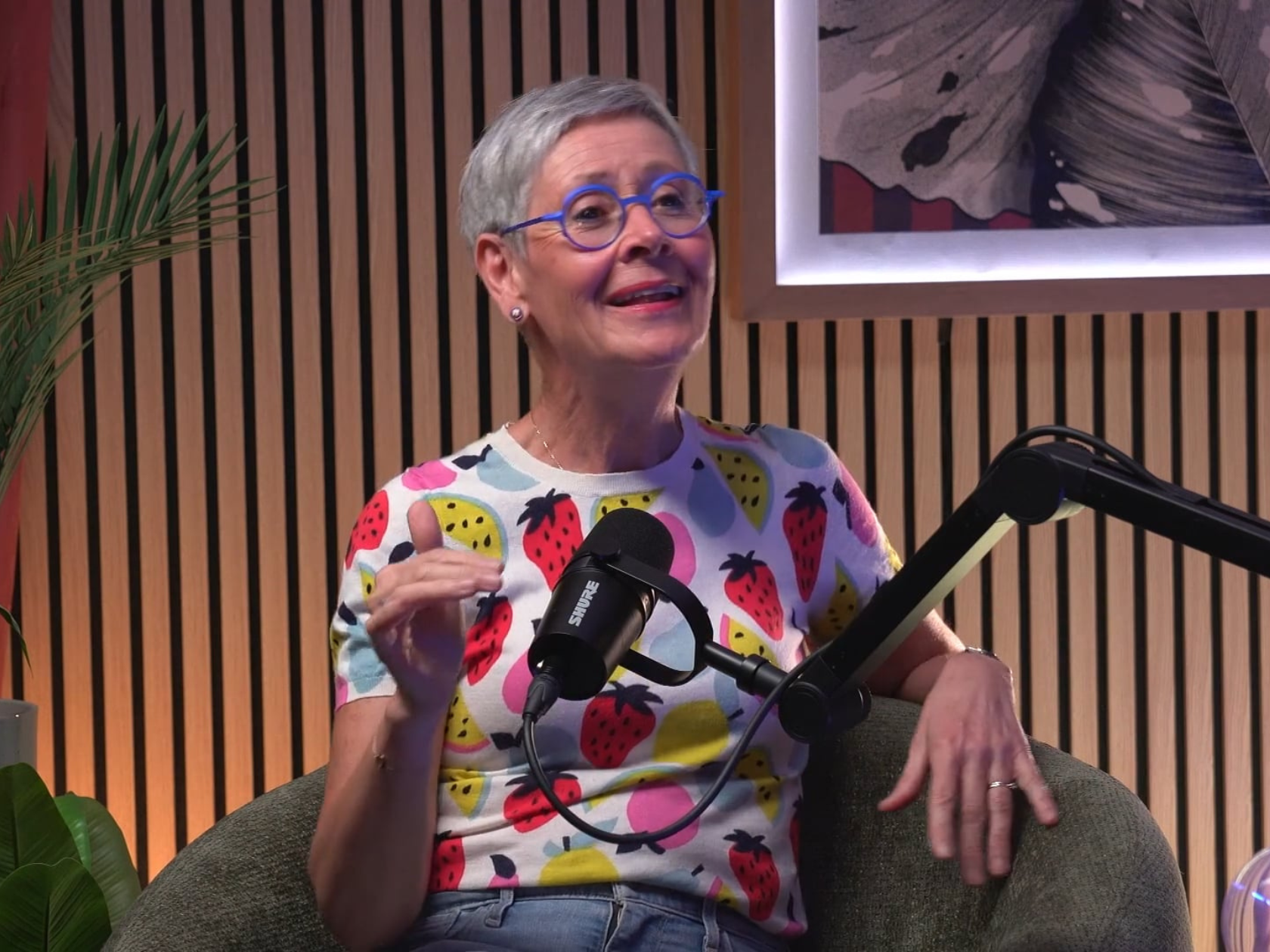

Melisande
Founder of Reflet 🫶
Publié le16.09.2026.png) Modifié le16.09.2026
Modifié le16.09.2026
Your libido is dropping during menopause: is it really hormonal?
You’ve noticed that you have less desire, or that things don't get going like they used to, and you tell yourself it’s "just menopause." That’s partly true, but probably not for the reasons you imagine. We tend to believe that the drop in estrogen directly kills desire. In reality, testosterone (the hormone most linked to libido) remains generally stable in menopausal women: the ovaries produce a little less, but the adrenal glands take over, and since estrogen levels drop more significantly, the hormonal balance actually tips in favor of testosterone.
So, from a purely hormonal point of view, there is no reason for your libido to collapse during menopause. The real problem is often elsewhere: in the comfort of the act itself. When the vaginal lining becomes thinner and less lubricated due to a lack of estrogen (we discuss this in detail in the article on intimate dryness during menopause), intercourse becomes less pleasant, and sometimes downright uncomfortable. And that has a direct effect on desire.
The vicious cycle that kills desire without you even realizing it
Here is the mechanism, as we often observe it in consultations: the lining is drier, so foreplay is less pleasant. Less pleasant means arousal doesn't build as well. Less arousal means even less natural lubrication. And because it’s less comfortable, you have less desire to do it again next time. The result: you space out intercourse, which dries out the lining even more (the vagina is, quite literally, maintained through use). It’s a true vicious cycle, and you have to break it consciously rather than waiting for it to resolve on its own.
When intercourse becomes painful
If, in addition to discomfort, you feel real pain during penetration, this is not something to minimize or "just put up with." We detail the causes and practical solutions in the article dedicated to painful intercourse during menopause. Spoiler: it is almost never inevitable, and there are simple, local solutions that can be implemented quickly.
The role of lubricant in reigniting desire
The simplest and most underutilized reflex: lubricant. Many women think that using one is "admitting" to a problem, or that if they were truly aroused, they wouldn't need it. That is false, and thinking that way is actually counterproductive. During menopause, natural lubrication takes longer to kick in and is less abundant, even when arousal is fully present. Using a lubricant isn't a fallback; it’s a way to shorten foreplay and make intercourse comfortable from the start, which mechanically sustains desire rather than extinguishing it. We explain how to choose the right one in our guide on lubricants for vaginal dryness.
Feeling desirable: an often overlooked ingredient
Desire doesn't just depend on the body; it also depends on how we view it. To desire someone else, you first need to feel desirable yourself. This comes down to how comfortable you are in your own skin at this stage of life—whether through physical activity, feeling good in your clothes, or simply accepting a changing body. This isn't a mandate to "stay young" or conform to an ideal; it's the opposite. The more at peace you are with your image, the more room there is for desire to exist.
Responsive desire in women: a poorly understood mechanism
For men, desire can arise very quickly; it may only take a few seconds between stimulation and the onset of physical arousal. For women, it doesn't work that way at all. This isn't specific to menopause—it's true at any age, except perhaps at the very beginning of a relationship when oxytocin temporarily changes the rules.
For women, desire is most often responsive : it doesn't precede the act, it arises during it. In practical terms, this means you need to give yourself about twenty minutes of preparation before even talking about foreplay, so that your body can get into the right headspace. Waiting to "feel like it" before starting often means waiting for something that won't happen spontaneously, especially after several years in a relationship. Understanding this changes everything: it removes the guilt of "not being in the mood" at the start and shifts the focus toward preparation rather than waiting for a signal that should fall from the sky.
Perimenopause and libido: when does it start?
These changes don't appear suddenly on the day of menopause. They often begin during perimenopause, the transition phase that can last several years before periods stop completely. During this time, hormonal fluctuations are irregular, which can lead to more unpredictable shifts in desire than during confirmed menopause, when hormone levels stabilize. If you notice changes in your libido while you are still having periods (even irregular ones), it is neither premature nor abnormal: it is a gradual evolution that is better to anticipate than to endure.
The "SMIC" method for jump-starting a stalled sex life
When your sex life has been on pause for a while (due to childbirth, illness, stress, or simply the cumulative effect of the vicious cycle mentioned above), there is a simple method used in behavioral sex therapy that gynecologist Odile Bagot humorously summarizes as SMIC: the Minimum Essential and Consensual Sex.
The principle is simple: don't wait for desire to return "naturally." Instead, decide together on a fixed time during the week (often on the weekend, usually in the afternoon) to reconnect physically, without the pressure of performance or specific goals. Prepare yourself (a shower, a scrub to wake up nerve endings, using lubricant from the start), and if it’s not "fireworks" this time, that’s okay—there’s always next week. The simple act of planning reduces pressure and breaks the vicious cycle of "less sex = less desire."
Contrary to popular belief, desire doesn't wear out with use. It's the opposite: the less sex you have, the less you want it. Like desire itself, the body needs to be maintained through use.
What if you're single? Autosexuality to maintain function
This mechanism works just as well solo. Whether after a long period without a partner or simply because you are currently single, masturbation and the use of appropriate sex toys allow you to maintain sexual function as a biological necessity, just as you would maintain any other muscle or bodily function. It is also a great way to reclaim areas of your body that you may have neglected during a difficult period, without the pressure of satisfying a partner.
When to see a sex therapist or healthcare professional
There is no standard frequency to follow: what matters is the harmony between partners (or with yourself, if you are single), not a specific number. However, if a drop in desire creates a real imbalance in the relationship, if partners are not aligned in their expectations, or if pain persists despite using lubricant and local treatment, it is the right time to talk to your gynecologist, your midwife (if trained in sexology), or to consult a sex therapist directly. The first step, which is often underutilized, is to dare to speak to a healthcare professional before the situation deteriorates.
Key takeaways
- Low libido during menopause is not primarily hormonal : testosterone levels generally remain stable
- The real barrier is often the vicious cycle of dryness, discomfort, and disinterest, which must be actively broken
- A lubricant is not a sign of failure, but a tool to reignite pleasure
- Female desire is responsive : it emerges during foreplay, not before
- The SMIC method helps restart a paused sex life without performance pressure
- Anautosexual approach is a legitimate option, whether alone or with a partner
- If the issue persists: talk to a healthcare professional without delay
To learn more about this topic and the genitourinary syndrome of menopause as a whole, the Osée Ménopausée program was designed to provide you with practical support during this phase, featuring experts like gynecologist Odile Bagot. You can also watch the full video episode with Odile Bagot on libido and sexuality during menopause.
Does menopause really lower your libido?
Programs that could help
Les Séries Santé recommandés
Do we freeze our oocytes?
Le Rubis is the first podcast dedicated to egg freezing. I answer all your questions about this journey, I wonder about the emotional impacts of this approach and I give you the keys to take action , as long as it's your choice! If you asked yourself the question Once in your life, Le Rubis is made for you. Available only in French speaking.
I discover the Ruby.webp)

.png)


