Night sweats: why they happen and how to sleep better
Night sweats disrupt sleep and leave you exhausted. Pharmacist and author Carole Minker explains why they happen at night and how to soothe them, from your bedroom environment to the vagus nerve.


Melisande
Founder of Reflet 🫶
Publié le16.10.2026 Modifié le14.11.2026
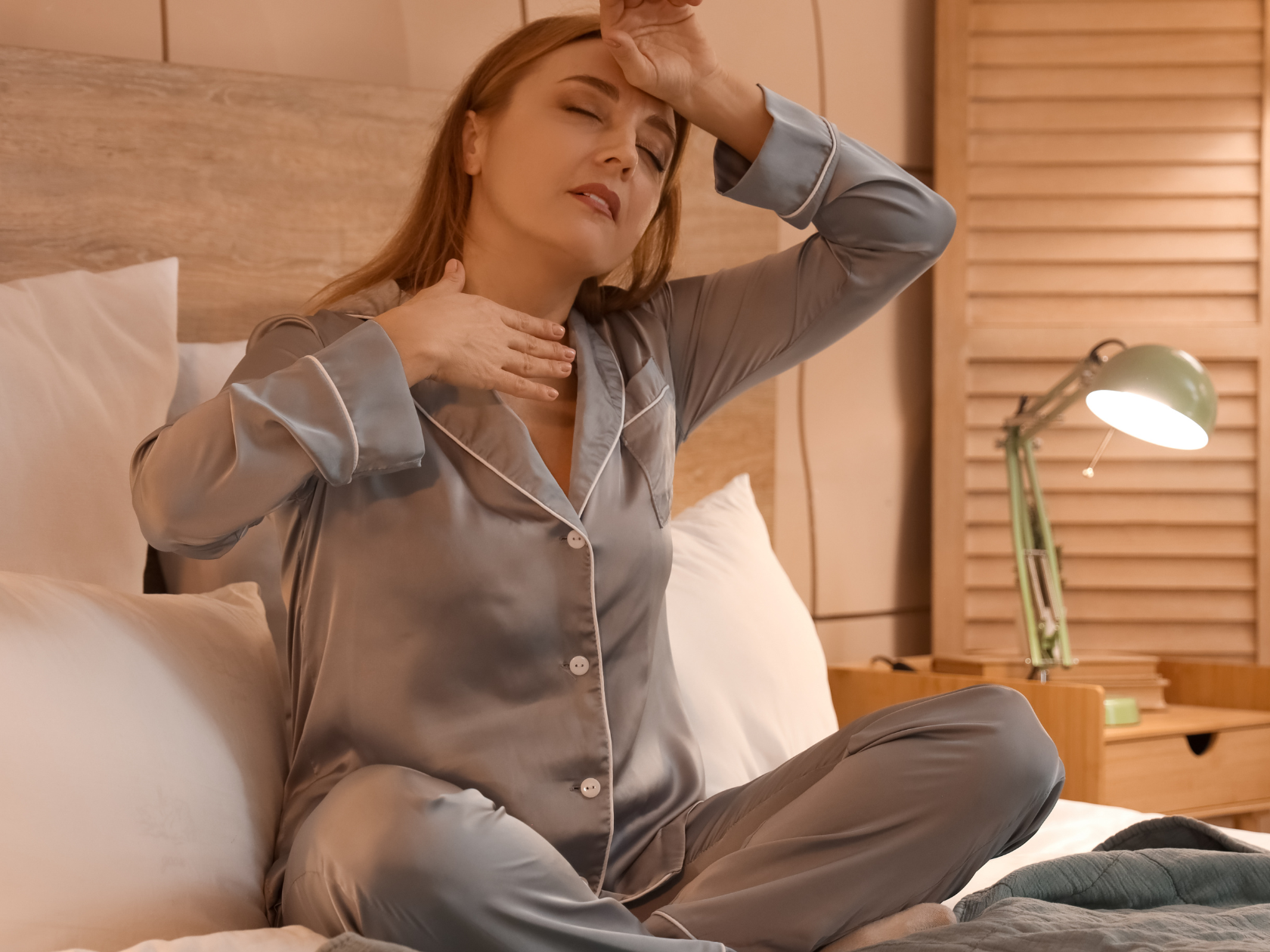
3 a.m. You wake up burning hot, your neck and chest soaked, you kick off the duvet… then you start shivering, and it’s impossible to fall back asleep. If this happens several times a week, you are likely experiencing night sweats, also known as nocturnal hot flashes.
The pharmacist Carole Minker, an expert in our series Génération Péri, reminds us: hot flashes can occur day or night, but at night, they come at a specific cost: they ruin your sleep. Here is how to understand and soothe them.
Why hot flashes happen at night
The mechanism is the same as during the day. Carole describes it as a chain reaction:
- Estrogen levels fluctuate, typically during perimenopause.
- The brain's thermostat, the hypothalamus, becomes misaligned and believes the body is overheating.
- It triggers an emergency cooling response : blood vessels in the skin dilate, and you feel hot.
- Then the rebound effect : since the body isn't actually too warm, it cools down too much, and you get the chills.
At night, this hot-cold cycle is particularly disruptive because body temperature plays a key role in sleep. To fall asleep and stay asleep, the body needs to cool down slightly. A hot flash breaks this balance and causes you to wake up. To understand the mechanism in full, read our guide on hot flashes.
What can trigger them in the evening
- a bedroom that's too warm or a duvet that's too thick;
- synthetic pyjamas or sheets, which trap heat;
- alcoholin the evening , which dilates blood vessels;
- a heavy, spicy, or very hot dinner, or late-night coffee;
- thestress from the day, which keeps the nervous system on high alert.
The vicious cycle of hot flashes and sleep
Repeated nighttime awakenings lead to fatigue, irritability, and difficulty concentrating. Yet, fatigue and stress make hot flashes more frequent. It's a vicious cycle, and that's why it's worth taking action.
Good to know: during perimenopause, sleep can also be disrupted independently of hot flashes. Difficulty falling asleep and waking up during the night are among the very first symptoms described by Flamme Servera, founder of Ginama, a partner of this series. We detail them in our article on the 35 symptoms of perimenopause.
Adapting your bedroom and bed
These are the simplest steps, and often the first ones to try. As Carole points out, they relieve the sensation but do not address the root cause. We combine them with the rest.
- A cool bedroom : around 16 to 18°C (60-64°F), with the window cracked open if possible.
- Natural materials : cotton or linen, which allow the skin to breathe. Avoid synthetics for both pajamas and sheets.
- Layers instead of a heavy duvet : a light sheet plus a throw blanket, easy to push aside and pull back on when the chills set in.
- A fan or a hand fan within reach.
- A glass of cold water on the nightstand.
- A spare pair of pajamas, so you don't have to stay in damp fabric that makes you feel cold.
Cold, your ally at night
Carole talks at length about a surprising solution: perineal cryotherapy. It involves applying a cold gel pack to the perineum. The idea is to bring cold to a body that thinks it is overheating, to prevent it from triggering its emergency cooling system. It is also said to have a soothing effect via the vagus nerve.
Its advantages, according to Carole: it is inexpensive, non-invasive, requires nothing to be ingested, and she knows of no side effects, contraindications, or drug interactions. Some women use it at bedtime, others upon waking from a hot flash.
Another option: a cold pack on your neck, on the side, back, or base, which also stimulates the vagus nerve.
Precaution: always wrap the pack in a cloth, never apply cold directly to the skin, and limit it to a few minutes.
Calming your nervous system before sleep
Since the nervous system amplifies the chain reaction, calming it down in the evening is a valuable strategy. Carole suggests several practices that stimulate the vagus nerve, the body's main "calming" nerve, which also affects sleep and digestion:
- a few minutes of heart coherence (breathing slowly, about six breaths per minute);
- some gentle yoga or qi gong;
- a meditation guided meditation;
- some breathing slow breathing when you go back to bed after a hot flash.
Not everyone is into meditation, and that's okay. The idea is to test several practices to find what works for you. Regular physical activity during the day also helps, provided you don't do intense exercise right before bed.
What to do when you wake up in a sweat
When a hot flash wakes you up, the reflex is often to toss and turn, check the time, or worry about the next day. All of this further stimulates the nervous system. A few tips to get back to sleep faster:
- Push back the covers and let the heat escape, without turning on bright lights or checking your phone.
- Drink a few sips of cool water.
- Apply something cold to your neck or wrists, using a cold pack wrapped in a cloth.
- Breathe slowly : inhale through your nose for four or five seconds, exhale gently for five or six seconds, for a few minutes.
- Change your pajamas if you are soaked, then pull up a light sheet before the chill sets in.
- Avoid checking the time : counting the hours left only fuels anxiety.
If you've been awake for more than twenty minutes, it's better to get up, do a quiet activity in dim light, and then go back to bed when you feel sleepy again.
What about your partner?
Night sweats don't just wake you up. The need for cool air, pushing the duvet away, or opening a window can create tension. Two separate duvets, tailored to each person's needs, are often a simple solution. Talking about it openly also helps: understanding what's going on prevents misunderstandings.
A bedtime routine that helps
- Eat a light dinner, not too late, and limit spices and very hot dishes.
- Alcohol and coffee : limit these, especially in the evening.
- A lukewarm shower, not a hot one, before bed.
- Turn off screens a little while before sleeping.
- Stick to a regular schedule, even on weekends.
What about herbs, supplements, and treatments?
If daily habits aren't enough, other solutions exist:
- herbs and supplements acting on the nervous system (like saffron) or on circulation, with or without phytohormones. We detail them, along with their precautions, in our article on plants for hot flashes;
- sleep-promoting plants, if you also have trouble falling back asleep: read our article on herbs for sleep;
- hormone therapy, the most effective option for intense hot flashes, to be discussed with your doctor.
Do not combine multiple sedative plants, or a plant with a sleeping pill, without professional advice.
When to see a doctor for night sweats
Perimenopause night sweats are common. However, they can also have other causes, such as an infection, a thyroid disorder, certain medications, or, more rarely, other illnesses. Consult your doctor if:
- you also have a fever, aunexplained weight loss or extreme fatigue;
- you have swollen lymph nodes, a persistent cough, or unusual pain;
- your night sweats occur outside of perimenopause or appear very suddenly;
- if they keep you from sleeping regularly, quite simply.
To learn about other possible causes, read our article on hot flashes without menopause, and find our content on perimenopause.
Discover the episode with Carole Minker
Discover the Generation Peri series
Key takeaways
- Night sweats follow the same chain reaction as daytime hot flashes, but they are particularly disruptive to sleep.
- A cool bedroom, natural fabrics, and light layers help relieve the sensation.
- Cold therapy (perineal cooling, a cold pack on the neck) and calming the vagus nerve can help interrupt the cycle.
- Alcohol, coffee, spicy dinners, and evening stress can trigger them.
- Night sweats accompanied by fever, weight loss, or occurring outside of perimenopause should be checked by a doctor.
FAQ
Why do we get hot flashes at night?
Because the brain's thermostat, disrupted by hormonal fluctuations, triggers an emergency cooling response even during sleep. A warm room, alcohol, or stress can make them worse.
How can I avoid hot flashes at night?
Keep your bedroom cool, opt for cotton or linen, limit alcohol and coffee in the evening, and try slow breathing or applying something cold to your neck. If they persist, talk to your doctor.
Is it normal to have hot flashes at night without sweating?
Yes, not all hot flashes cause sweating. Intensity varies from one woman to another and from one night to the next.
Are night sweats always linked to menopause?
No. Infections, thyroid issues, medications, or other conditions can cause them. Consult a doctor if they are accompanied by other symptoms or occur outside of perimenopause.
What is the ideal bedroom temperature?
A cool room, around 16 to 18°C (60–64°F), generally helps you sleep better.
The information in this article is for educational purposes only and does not replace professional medical advice. The Génération Péri series is produced in partnership with Ginama. If your night sweats are accompanied by other symptoms or are disrupting your sleep, please consult your doctor.
Why do we get night sweats?
Programs that could help
Les Séries Santé recommandés

Do we freeze our oocytes?
Le Rubis is the first podcast dedicated to egg freezing. I answer all your questions about this journey, I wonder about the emotional impacts of this approach and I give you the keys to take action , as long as it's your choice! If you asked yourself the question Once in your life, Le Rubis is made for you. Available only in French speaking.
I discover the Ruby