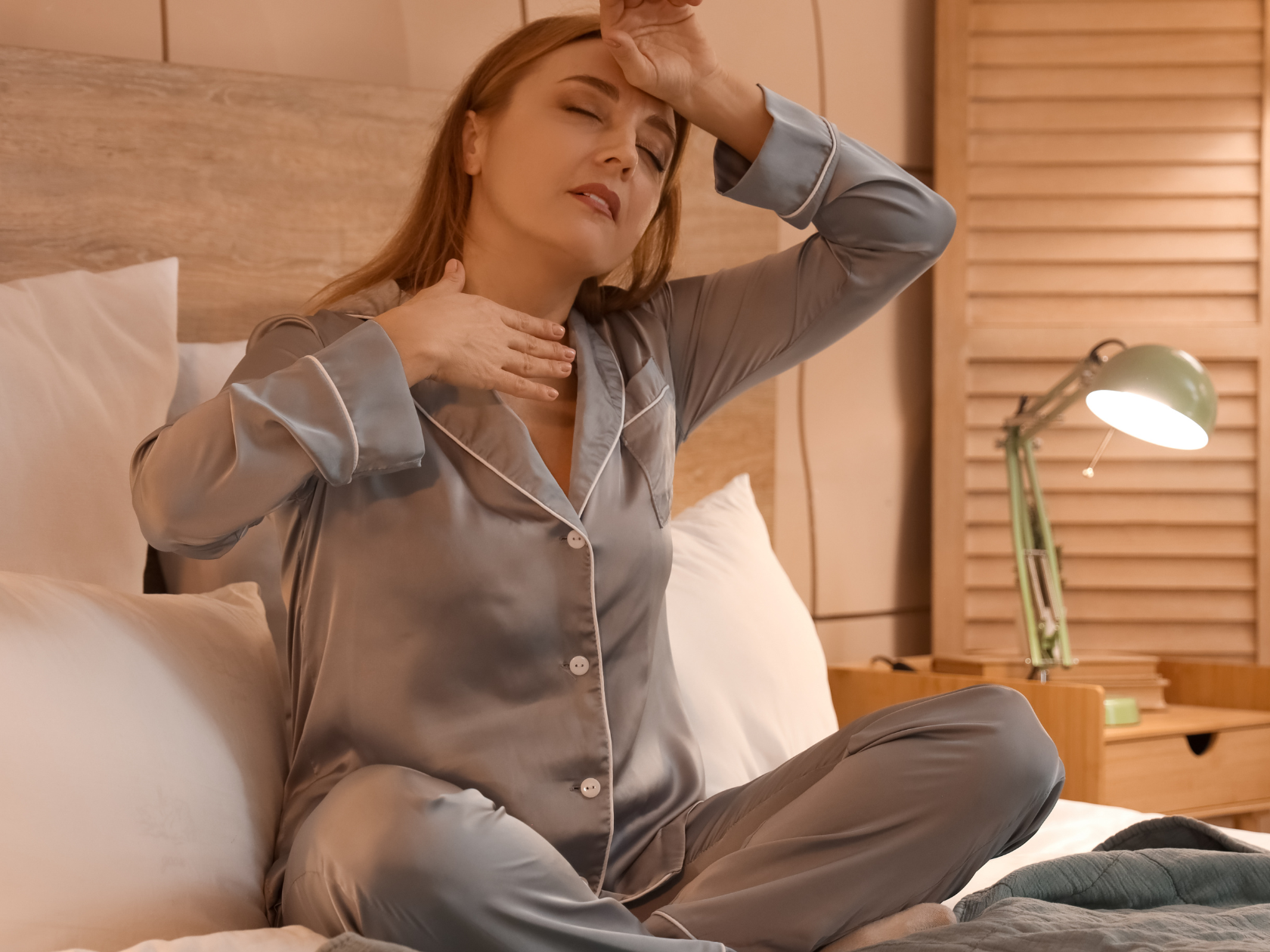
Hot flashes without menopause: what are the causes?
We associate hot flashes with menopause, but they can have many other causes—often benign, sometimes requiring investigation. Here is an overview, along with the signs that should prompt you to see a doctor.


Melisande
Founder of Reflet 🫶
Publié le16.10.2026 Modifié le15.11.2026
You're 30, you have regular periods, and yet you're experiencing hot flashes? Don't worry: it doesn't necessarily mean "early menopause." Hot flashes can have many causes, most of which are not serious.
In our seriesGénération Péri, the pharmacist Carole Minker explains that hot flashes result from a chain reaction: hormones, thyroid, the brain's thermostat, blood vessels, and the nervous system. Understanding this chain helps explain why so many different situations can trigger them.
Reminder: how a hot flash begins
A hot flash is an emergency cooling response. The brain's thermostat, the hypothalamus, believes the body is too hot. It then opens the skin's blood vessels to release heat: the upper body flushes, you feel hot, and sometimes you sweat. Then, the body cools down too much, and you shiver.
Carole emphasizes one point: several systems are interconnected. The brain-ovary axis, the brain-thyroid axis, and the brain-adrenal axis (the stress axis) all influence one another. Anything that disrupts one of these links can therefore cause hot flashes. She also points out that cold helps with fever, proving that the temperature regulation mechanism is not limited to menopause. To understand everything, read our guide on hot flashes.
Hormonal causes, outside of menopause
1. Around your period
Some women experience hot flashes or night sweats just before or during their period. The drop in estrogen and progesterone at the end of the cycle can be enough to briefly disrupt the thermostat. This is often temporary and cycle-related.
2. During ovulation
More rarely, hormonal fluctuations in the middle of the cycle can be accompanied by a feeling of heat.
3. During pregnancy
Hormonal shifts, increased blood volume, and a faster metabolism often make pregnant women feel hot, especially toward the end of pregnancy.
4. After childbirth and during breastfeeding
After birth, estrogen levels drop sharply. Night sweats are common in the weeks following delivery and can persist while breastfeeding.
5. Perimenopause, sooner than you think
This is the most overlooked cause. Perimenopause can begin as early as 35 for some women while they are still having periods. Hot flashes can therefore appear well before menstruation stops. Read our article on the age of perimenopause. And if your periods stop before age 40, it could be early menopause, which should be investigated.
6. Hormonal treatments
Certain treatments alter hormones and can cause hot flashes: treatments used for endometriosis, during fertility treatments, or hormone therapies prescribed after certain breast cancers. If this applies to you, talk to your doctor: there are solutions that can be adapted to your situation.
The specific case of PCOS
Polycystic Ovary Syndrome (PCOS) causes hormonal imbalances that can, for some women, be accompanied by sensations of heat. If you have PCOS and experience hot flashes, talk to your doctor to check your hormonal balance and thyroid. Find our content on PCOS.
The thyroid
7. An overactive thyroid
As Carole points out: "The thyroid is the organ that manages thermoregulation, the regulation of our body temperature." Hyperthyroidism (an overactive thyroid) can cause a constant feeling of heat, sweating, palpitations, weight loss, and nervousness. A simple blood test can check how it is functioning.
Stress, anxiety, and the nervous system
8. Stress and anxiety
Stress activates the "alert" nervous system and the brain-adrenal axis. On its own, it can cause hot flashes, flushing, and sweating. Anxiety attacks are often accompanied by a sensation of intense heat, heart palpitations, and perspiration. And during perimenopause, stress is also a known trigger for hot flashes.
That is why methods that calm the nervous system, such as those mentioned by Carole (yoga, breathing exercises, heart coherence, meditation), can help regardless of the cause.
Medications and diet
9. Certain medications
Several classes of medications can cause hot flashes or sweating: certain antidepressants, hormone therapies, heart or blood pressure medications, and fever-reducing treatments as they wear off. If your hot flashes started after beginning a new treatment, talk to your doctor or pharmacist. Never stop taking a medication on your own.
10. What you eat and drink
- Alcohol, which dilates blood vessels.
- Spicy foods, especially chili peppers.
- Very hot drinks and caffeine.
- A very large meal : digestion increases heat production.
If your hot flashes occur mainly after meals, these triggers are a good place to start looking.
Other causes not to be overlooked
Other situations can cause hot flashes or sweating, particularly at night:
- an infection, with or without a fever;
- hypoglycemia, particularly in treated diabetic patients;
- significant overweight, which affects temperature regulation;
- more rarely, certain conditions that require an assessment, such as specific hormonal disorders or certain blood cancers.
These causes are much less common, but it is precisely to ensure they are not overlooked that you should consult a doctor when hot flashes are unusual.
An isolated hot flash is nothing to worry about. What should alert you is when they persist without explanation or are accompanied by other symptoms.
How can you tell the difference? A few clues
While not a substitute for medical advice, a few clues can help guide your thinking:
These factors can overlap: a 42-year-old woman may be starting perimenopause while also going through a period of intense stress. That is why a doctor's opinion remains the most reliable.
When should you consult a doctor?
Make an appointment with your doctor if your hot flashes:
- appear for no obvious reason, outside of perimenopause, pregnancy, or the postpartum period;
- are accompanied by fever, by heavy night sweats, by unexplained weight loss unexplained weight loss or extreme fatigue;
- are accompanied by heart palpitationstremors, or nervousness;
- appeared with a new medication;
- keep you from sleeping or living a normal life.
Depending on your situation, your doctor may suggest a blood test (thyroid, blood sugar, hormonal panel, signs of infection), review your current treatments, or refer you to a specialist. In the vast majority of cases, the cause is benign and easy to identify.
To help them, keep a record for a few weeks of when they occur, how long they last, what you were doing just before, and where you are in your cycle.
And if you aren't being listened to, or if you are too quickly told that "it's just stress," you have the right to seek a second opinion. Your symptoms deserve to be taken seriously.
How to relieve them in the meantime
Regardless of the cause, some simple steps can provide relief:
- cooling down : a glass of cold water, a cold pack on your neck (wrapped in a cloth);
- lightweight clothing made of natural materials, in layers that are easy to remove;
- slow breathing or heart coherence to calm the nervous system;
- limit alcohol, coffee, and spicy foods if you notice they trigger them.
If your hot flashes are related to perimenopause, find all the solutions in our article on night sweats, in the one on plants for hot flashes and in our content on perimenopause.
Discover the episode with Carole Minker
Discover the Generation Peri series
Key takeaways
- Hot flashes aren't just for menopause: periods, pregnancy, postpartum, or early perimenopause can all trigger them.
- The thyroid, which acts as the body's thermostat, is a common cause that should be checked.
- Stress, certain medications, alcohol, and spicy foods can also trigger them.
- More rarely, they may signal an infection or another medical condition.
- Consult a doctor if they are unusual, persistent, or accompanied by other symptoms.
FAQ
What medical conditions can cause hot flashes?
The most common are hyperthyroidism, infections, and anxiety. More rarely, other conditions can cause them. Consult a doctor if they are unusual.
Can you have hot flashes at 30?
Yes. They can be linked to your cycle, pregnancy, the postpartum period, stress, medication, or your thyroid. If they persist, talk to your doctor.
Are hot flashes before your period normal?
It can happen: the drop in hormones at the end of your cycle can briefly disrupt your body's thermostat. If this is new after age 35, it could also be a sign of perimenopause.
Can stress cause hot flashes?
Yes. Stress activates the nervous system and can trigger heat surges, flushing, and sweating.
Why do I get hot flashes after eating?
Alcohol, spicy or very hot foods, and large meals can trigger them. If they are frequent or accompanied by other symptoms, consult a professional.
The information in this article is for educational purposes only and does not replace professional medical advice. The Génération Péri series is produced in partnership with Ginama. If your hot flashes are unusual or accompanied by other symptoms, consult your doctor.
What medical condition can cause hot flashes?
Programs that could help
Les Séries Santé recommandés

Do we freeze our oocytes?
Le Rubis is the first podcast dedicated to egg freezing. I answer all your questions about this journey, I wonder about the emotional impacts of this approach and I give you the keys to take action , as long as it's your choice! If you asked yourself the question Once in your life, Le Rubis is made for you. Available only in French speaking.
I discover the Ruby