The 35 symptoms of perimenopause (and how to recognize them)
Perimenopause is about more than just hot flashes. Here are the 35 most commonly reported symptoms, categorized by type, along with the signs that should prompt you to consult a professional.

Melisande
Founder of Reflet 🫶
Publié le16.10.2026 Modifié le10.11.2026
"I'm more tired than usual, but that's normal; I have so much to manage." If you're over 35, this might sound familiar. During perimenopause (also known as perimenopause), symptoms are numerous, varied, and often blamed on stress, mental load, or fatigue.
This is what Flamme Servera, founder of Ginama and partner in our Génération Péri series, discovered after interviewing hundreds of women in Facebook groups. The symptoms varied so much from one woman to another that she decided to design her products "symptom by symptom." To help you navigate this, here are the 35 most commonly reported symptoms, categorized by type.
Premenopause, perimenopause: what are we talking about?
Both terms refer to the same period: the transition years before menopause, during which hormones (especially estrogen and progesterone) fluctuate like a "rollercoaster." It is this instability, rather than the decline itself, that accounts for most symptoms. It usually begins between the ages of 40 and 45, and sometimes as early as 35. To understand everything, read our guide on perimenopause.
You won't experience all 35 symptoms. Some women feel very few, while others feel many. This list is meant to help you put a name to what you are experiencing, not to cause you worry.
Symptoms related to your cycle and intimacy
1. Irregular periods. Cycles become shorter or longer, or periods are "skipped." This is often the first visible sign.
2. Heavier or longer periods. Common during perimenopause, but something to mention to your doctor, especially if you are feeling tired (risk of anemia).
3. More pronounced premenstrual syndrome. Irritability, tension, and food cravings before your period, sometimes more intense than before.
4. Sore or swollen breasts. Linked to fluctuations in estrogen.
5. Vulvovaginal dryness. A drop in estrogen dries out the mucous membranes. This is one of the most frequent symptoms in Flamme's questionnaires, and one of the least discussed during consultations. Hormone-free moisturizing gels or local treatments prescribed by your doctor can provide relief.
6. A decrease in libido. A subject that is still very taboo. Flamme has noticed that women rarely talk about it in writing, but much more often in one-on-one conversations.
7. Pain during intercourse. Often linked to intimate dryness. There are solutions for this: don't hesitate to talk about it.
8. Recurring cystitis. The urinary mucous membranes are also sensitive to estrogen. In the responses received by Flamme, this was one of the three most cited symptoms.
9. Urinary leakage. During physical exertion, coughing, or laughing. Pelvic floor physical therapy can be a great help.
10. An imbalance in vaginal flora. Unusual odors, itching, or discharge that is thicker or has changed. Flamme experienced this herself: "You go to your gynecologist, they give you an antibiotic, and it comes back." If the symptoms return, talk to your doctor about it.
Symptoms related to temperature
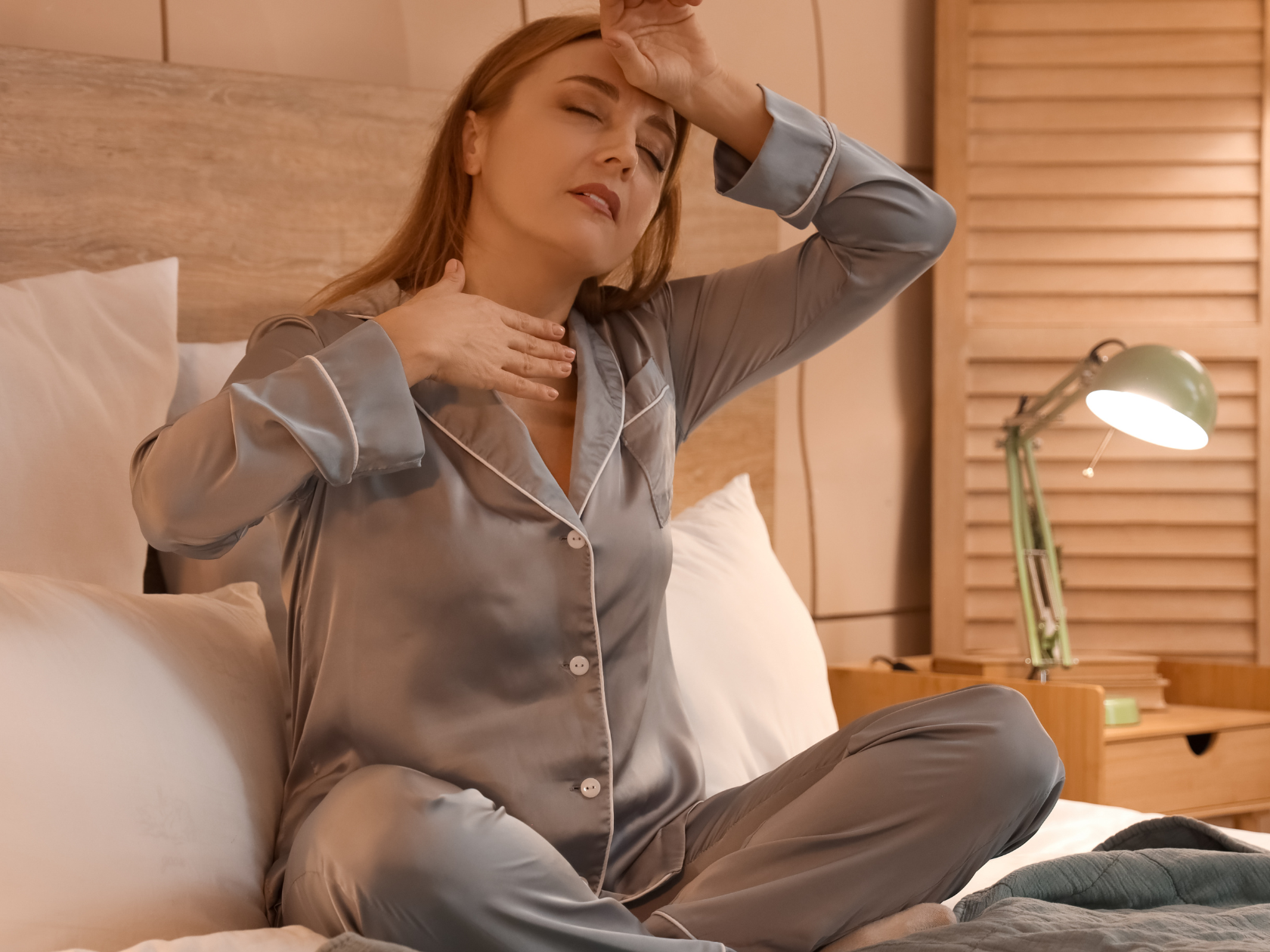
11. Hot flashes. A wave of heat that washes over the upper body, sometimes accompanied by flushing. They are not always the first symptom, but they remain very common: we have a complete guide dedicated to them on hot flashes.
12. Night sweats. Hot flashes during sleep that can wake you up drenched. See our article on night sweats.
13. Chills after a hot flash. After the heat, the body "overcompensates," which can leave you feeling cold.
Sleep and energy-related symptoms
14. Difficulty falling asleep. Often one of the very first signs, according to Flamme.
15. Waking up during the night. With or without sweats, often in the middle of the night.
16. Persistent fatigue. Linked to disrupted sleep, but not only that: hormones also affect your energy levels.
Emotional and cognitive symptoms
17. Anxiety. Sometimes new, with no apparent reason. It is one of the earliest symptoms.
18. Irritability. Your patience runs out faster than it used to.
19. Mood swings. Your mood goes on a rollercoaster, just like your hormones.
20. Low mood. If sadness sets in or you lose your motivation, talk to your doctor.
21. Brain fog. Feeling like your head is in a cloud, or struggling to find the right words.
22. Memory lapses. Forgetting an appointment, a name, or why you walked into a room.
23. Difficulty concentrating. Finding it harder to stay focused on a task.
24. Headaches or migraines. These can appear or change in frequency with hormonal fluctuations.
Physical symptoms
25. Weight gain, especially around the midsection. Fat distribution changes as estrogen levels drop.
26. Bloating and digestive issues. A swollen belly and changes in bowel habits.
27. Joint pain. Knees, hands, shoulders: estrogen plays a key role in joint health.
28. Muscle stiffness or pain. Sometimes accompanied by slower recovery after physical exertion.
29. Heart palpitations. The feeling that your heart is racing, especially during a hot flash. Always have this checked by a doctor.
30. Dizziness. Occasional, sometimes associated with hot flashes. Also worth noting.
Skin, hair, and mucous membrane symptoms
These are the most surprising, and Flamme has often seen them come up in her questionnaires.
31. Drier skin. Less supple, sometimes more reactive.
32. Itching, even in the ears. Some women report itchy ears for no apparent reason: a surprising but frequently cited symptom.
33. Hair loss. Thinner hair that sheds more.
34. Dry eyes. Stinging, a gritty sensation in the eyes.
35. Dry mouth. Sometimes accompanied by a burning sensation. "All mucous membranes can become extremely dry," summarizes Flamme.
Why these symptoms often go unnoticed
There are several reasons for this.
- They arrive at a busy time in life. Children, work, aging parents: it is easy to blame everything on stress.
- They are scattered. A woman might experience dry eyes, night waking, and cystitis without making the connection between the three.
- The word is scary. "Perimenopause" sounds like "past its prime." Many women prefer not to think about it.
- Some doctors respond with "you're too young." Flamme has read this account dozens of times in its questionnaires.
The result: many women live with these symptoms alone, without knowing that there is an explanation and solutions.
How to take stock of your symptoms
The most useful thing for discussing this with a professional is to keep a record. For two or three months:
- the dates of your periods, their duration, and their flow;
- the symptoms from the list that apply to you, along with their intensity (from 1 to 10, for example);
- the times when they appear: before your period, at night, after a meal, or during stressful periods.
You can use a simple notebook, a note on your phone, or a cycle tracking app. This log will help you show your doctor, gynecologist, or midwife what you are really experiencing, beyond a fifteen-minute consultation.
When to see a doctor without delay
Certain signs should not be attributed to perimenopause without medical advice:
- very heavy bleeding, bleeding between periods, or bleeding after intercourse;
- bleeding that returns after several months without a period;
- frequent heart palpitations, chest pain, or shortness of breath;
- very low mood, dark thoughts;
- unexplained weight loss or extreme fatigue.
Other health issues, such as thyroid disorders, can cause similar symptoms. A check-up can help clarify what is going on.
What now?
"The first step is to understand what is happening. Once you understand, you can look for the right solutions that work for you," concludes Flamme. Lifestyle changes, hormone therapy, local treatments, dietary supplements: there are many paths to explore, which should be developed with a professional. If you are interested in supplements, read our article on food supplements during perimenopause, and find all our content on perimenopause.
Discover the episode with Flamme Servera
Discover the Generation Peri series
Key takeaways
- Perimenopause can cause a wide range of symptoms, but no one experiences all of them.
- The first signs are often anxiety, sleep disturbances, fatigue, and changes in your periods.
- Libido issues, vaginal dryness, and cystitis are very common, yet they are still rarely discussed during consultations.
- Some symptoms are surprising: itchy ears, or dry eyes and mouth.
- Tracking your cycles and symptoms helps you discuss them with a professional. Certain signs require prompt medical attention.
FAQ
What are the first symptoms of perimenopause?
Often anxiety, sleep disorders, fatigue, and periods that become more irregular or heavier.
Can perimenopause cause itching?
Yes. The drop in estrogen dries out the skin and mucous membranes. Some women experience itching of the skin, ears, or intimate area.
Can you have perimenopause symptoms at 35?
Yes, the first signs can appear as early as 35, although it is more common after 40. If your periods stop before age 40, consult a doctor.
How can you tell the difference between perimenopause and stress?
It’s difficult because the symptoms are similar. Tracking your cycles and symptoms over several months helps your doctor connect them to hormonal fluctuations.
Should you see a doctor for perimenopause symptoms?
Yes, as soon as they start to bother you, and don't wait if you experience unusual bleeding, heart palpitations, or very low mood.
The information in this article is for educational purposes only and does not replace professional medical advice. Flamme Servera is the founder of the brand Ginama, a partner of the Génération Péri series; she is not a healthcare professional. If a symptom worries you, talk to your doctor, gynecologist, or midwife.
What are the first symptoms of perimenopause?
Programs that could help
Les Séries Santé recommandés

Do we freeze our oocytes?
Le Rubis is the first podcast dedicated to egg freezing. I answer all your questions about this journey, I wonder about the emotional impacts of this approach and I give you the keys to take action , as long as it's your choice! If you asked yourself the question Once in your life, Le Rubis is made for you. Available only in French speaking.
I discover the Ruby