.png)
Endometriosis flare-ups: what to do and how to cope
What to do during an endometriosis flare-up, why stress can trigger one, and when to seek emergency care, featuring Aïssa's story.


 Publié le20.08.2026
.png) Modifié le29.08.2026
Modifié le29.08.2026
You feel a flare-up coming on, or it has already brought you to your knees without warning. Intense pain, sometimes nausea, sometimes unable to get up. We explain what an endometriosis flare-up really is, the steps that can help you in the moment, and what can reduce their frequency over time, through Aïssa's story.
What is an endometriosis flare-up?
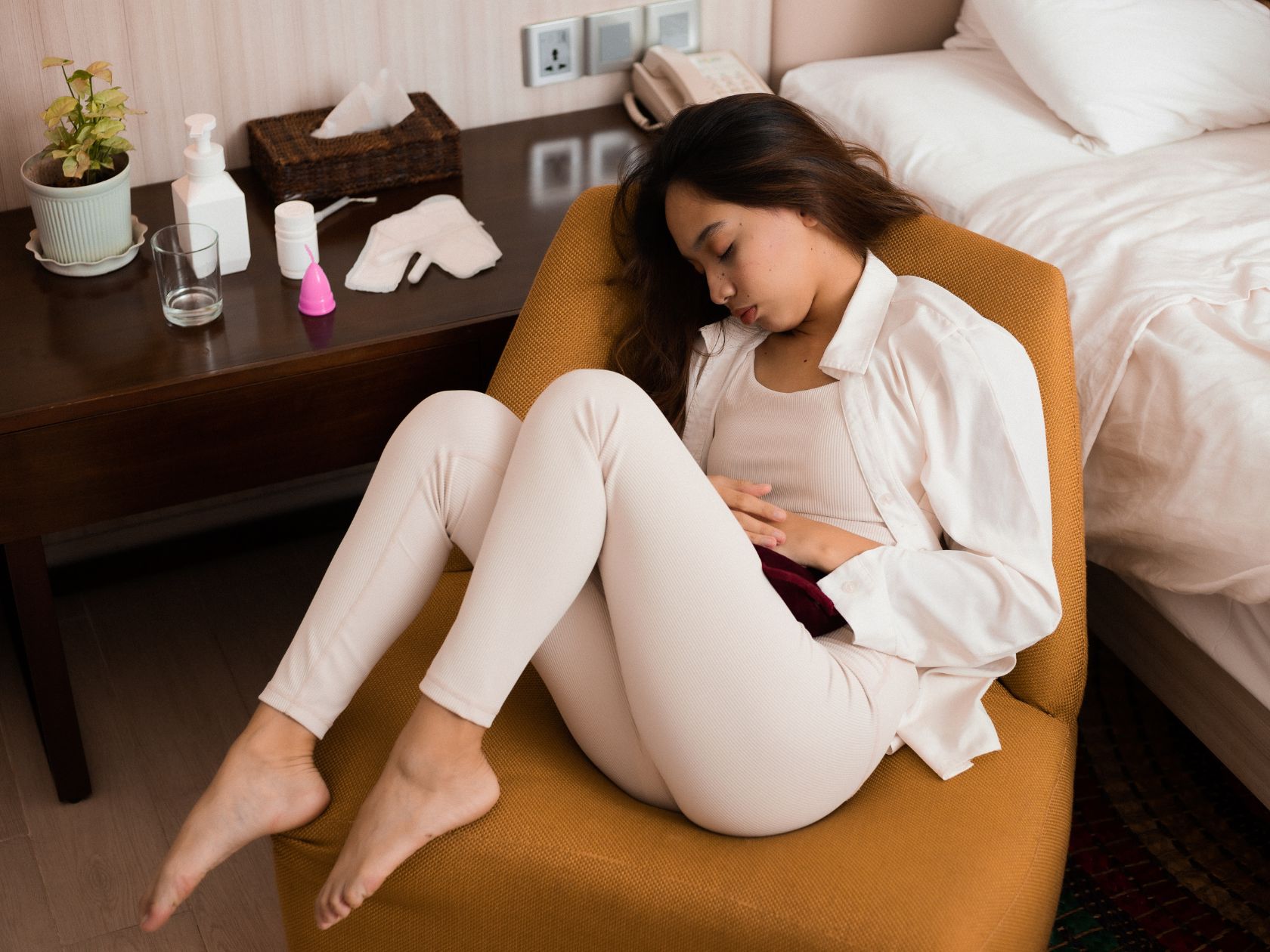
An endometriosis flare-up is an acute episode of intense pain caused by the activation of lesions. It most often occurs around your period, but not exclusively: it can also be triggered at other times in the cycle, including outside of your period. Its duration and frequency vary enormously from one woman to another: some experience occasional, isolated episodes, while others have frequent and prolonged flare-ups. As with the disease as a whole, the intensity of the flare-up is not correlated with the anatomical severity of the endometriosis: minimal lesions can cause very violent flare-ups.
An endometriosis flare-up is not "just a bad period"
There is often confusion, even among some women affected themselves, between an endometriosis flare-up and periods that are simply more painful than usual. The difference often lies in the intensity and resistance to standard painkillers: an endometriosis flare-up can be debilitating to the point of preventing you from working, moving around, or even standing, and does not always subside with a simple mild painkiller. It is this dimension that justifies talking about it as a full-fledged medical event, and not just as a more intense variation of classic period pain.
Aïssa's story: "I feel sick every time I have a flare-up"
When asked about her daily relationship with the disease, Aïssa makes a distinction that resonates with many affected women: outside of flare-ups, she almost "forgets" she is ill. It is during a flare-up that the reality of endometriosis hits her hard. This alternation between phases where the disease fades away and very violent acute episodes is a reality experienced by many women, and it can make daily life difficult to plan.
This way of experiencing the disease in "waves" also has a downside: because there can be many pain-free periods, those around you, and sometimes the person affected herself, tend to minimize the seriousness of what is happening during a flare-up. The fact that you are "doing well" most of the time does not in any way diminish the reality and intensity of what is experienced during the acute episode itself. This is also what makes the diagnosis take so long for many women: between two flare-ups, everything seems to return to normal, which can delay the moment when these episodes are finally associated with a specific pathology rather than a bad run of luck.
Steps that can help you during a flare-up
In addition to pain medication prescribed by your doctor (to be taken at the very beginning of the flare-up rather than waiting), certain steps can provide relief.
These steps do not replace pain medication when it is necessary, but they can complement its effect, particularly by acting on the muscular and nervous components of the pain. Heat, for example, helps relax tissues tightened by uterine contractions, while deep breathing acts on the autonomic nervous system, which plays a role in amplifying or attenuating the pain felt.
An important point of caution regarding anti-inflammatories (NSAIDs like ibuprofen): the French National Authority for Health (HAS) recommends not using them for more than 5 consecutive days, due to possible long-term side effects. Beyond that, or if flare-ups become frequent, it is important to discuss this with your doctor again rather than managing it alone with prolonged self-medication.
Other complementary approaches, such as osteopathy or acupuncture, are sometimes recommended in addition to medical follow-up to work on the mobility of pelvic tissues or on pain perception. Scientific data on their effectiveness remains limited, but they can be explored with a practitioner specifically trained in endometriosis, in addition to (and not instead of) your usual treatment.
The role of stress in triggering flare-ups
Stress is identified as a factor that can trigger or intensify an endometriosis flare-up. The mechanism involves cortisol, the stress hormone, which can affect general inflammation in the body when levels remain chronically high. Aïssa, who focused heavily on stress management during her transition to becoming a health coach, emphasizes the importance of learning to recognize your own stress signals—such as sleep disturbances, cravings, or tension—to address them early, rather than letting them build up silently, which, in her experience, can impact the intensity and frequency of flare-ups.
Stress is not the only potential trigger. Lack of sleep, a diet high in sugar or processed foods, or even intense physical exertion can also precede or accompany the onset of a flare-up for some women. These triggers vary greatly from person to person, making it all the more useful to identify your own over time, rather than relying solely on generic recommendations.
Sleep deserves special attention: a poor sleep-wake cycle can itself sustain a state of chronic stress, particularly due to prolonged screen exposure before bed, which disrupts melatonin secretion and delays sleep onset. A simple ritual, like stepping away from screens shortly before bed and prioritizing natural light upon waking, may seem minor, but it helps regulate the hormonal environment that supports both sleep and, indirectly, the frequency of flare-ups.
When a flare-up should alert you
Certain signs should prompt you to seek urgent medical attention rather than waiting for the pain to pass: pain that suddenly becomes much more intense than usual, an associated fever, very heavy or unusual bleeding, or a total inability to urinate or have a bowel movement. These situations may indicate a complication that requires immediate care.
Beyond these emergency signals, flare-ups that are becoming more frequent or longer-lasting, even without immediate complications, are also sufficient reason to consult your doctor again. They may indicate that your current treatment is no longer effective, and it is time to discuss it with your physician rather than simply increasing your pain medication dosage on your own.
Don't confuse it with other abdominal emergencies
Very intense and sudden pelvic pain is not always an endometriosis flare-up, even for a woman already diagnosed with the condition. Other emergencies can cause similar symptoms: a twisted or ruptured ovarian cyst, appendicitis, or, in the event of a missed period, an ectopic pregnancy. Precisely because these situations require rapid and specific care, any unusual pain that differs significantly from your typical flare-ups in location or intensity deserves immediate medical advice, rather than being automatically attributed to your known endometriosis.
The psychological weight of recurring flare-ups
Beyond the physical pain, living with recurring flare-ups also carries an emotional cost: the apprehension of the next episode, the inability to plan certain commitments with certainty, or the exhaustion of repeatedly explaining to friends, family, or employers why you need to be absent. This experience deserves to be acknowledged just as much as the physical pain itself, and may justify psychological support in addition to medical follow-up, without in any way questioning the reality of the disease.
Reducing the frequency of flare-ups over time
Beyond managing the flare-up itself, several levers can help reduce its frequency or intensity over the long term: an anti-inflammatory diet (more Omega-3s, fewer refined sugars and processed products), regular physical activity, better sleep and stress management, and, of course, medical treatment tailored to your situation. Keeping a journal of your flare-ups (possible triggers, intensity, duration) can also help you and your doctor better understand your own patterns and adjust your care. This is a useful habit as soon as you start trying to understand how to know if you have endometriosis, or to refine an existing treatment plan, including when pain occurs primarily outside of your period.
How your support system can help during a flare-up
Explaining what an endometriosis flare-up is in concrete terms to your partner, family, or colleagues can make a real difference in how it is experienced. Many women report that simply not having to justify themselves, or benefiting from a little flexibility—such as canceling a commitment, working from home, or having access to a hot water bottle or a quiet space—significantly lightens the burden of a flare-up. If possible, informing the relevant people in advance about what you are going through, rather than waiting until you are in the middle of a flare-up to explain it in a rush, can save you from extra stress when you need it least.
Key takeaways
An endometriosis flare-up is an acute episode of intense pain, not necessarily linked to the severity of your disease, whether it is a stage 4 or a milder condition. Simple actions can help in the moment (heat, breathing, rest), but frequent or highly debilitating flare-ups are worth discussing with your doctor, at any age, including after 40. You are not powerless against them: between effective immediate relief techniques and long-term lifestyle adjustments, there are concrete ways to manage them better, and no one should have to go through this alone or in silence.
Learn more on Reflet
Aïssa shares her full story in a video you can watch here: Aïssa's full testimonial.
The role of stress, diet, and movement in managing endometriosis flare-ups is the focus of our health series Invisible Endometriosis, hosted by Carole Minker, a pharmacist specializing in natural medicine and women's health. She explains the inflammatory mechanisms involved, offers practical guidance for building an anti-inflammatory routine that fits your daily life, and also addresses fertility issues related to endometriosis.
This article is for informational purposes only and does not replace professional medical advice. If you have any doubts or experience unusual pain, please consult your doctor.
Is an endometriosis flare-up always linked to an advanced stage of the disease?
Programs that could help

Les Séries Santé recommandés

Do we freeze our oocytes?
Le Rubis is the first podcast dedicated to egg freezing. I answer all your questions about this journey, I wonder about the emotional impacts of this approach and I give you the keys to take action , as long as it's your choice! If you asked yourself the question Once in your life, Le Rubis is made for you. Available only in French speaking.
I discover the Ruby.webp)



.png)

.png)


