.png)
How to tell if you have endometriosis
Persistent pain, digestive issues, chronic fatigue: which signs should alert you to possible endometriosis, and what does the diagnostic process actually look like today?



Melisande
Founder of Reflet 🫶
Publié le20.08.2026.png) Modifié le26.08.2026
Modifié le26.08.2026
You’ve had painful periods for as long as you can remember, and you’ve always been told it’s normal. You have recurring digestive issues that no one has ever linked to your cycle. For months or even years, you’ve been wondering if what you’re experiencing has a name. We aren't going to provide a diagnosis here, but we will help you understand the warning signs, how a proper diagnostic process works, and why it takes an average of 7 years to identify endometriosis in France.
The signs you should watch out for
Endometriosis affects about 1 in 10 women of reproductive age. Yet, it remains one of the most poorly identified gynecological conditions because its symptoms are often mistaken for "just bad period cramps." Here is what should really grab your attention.
Pain that is out of the ordinary
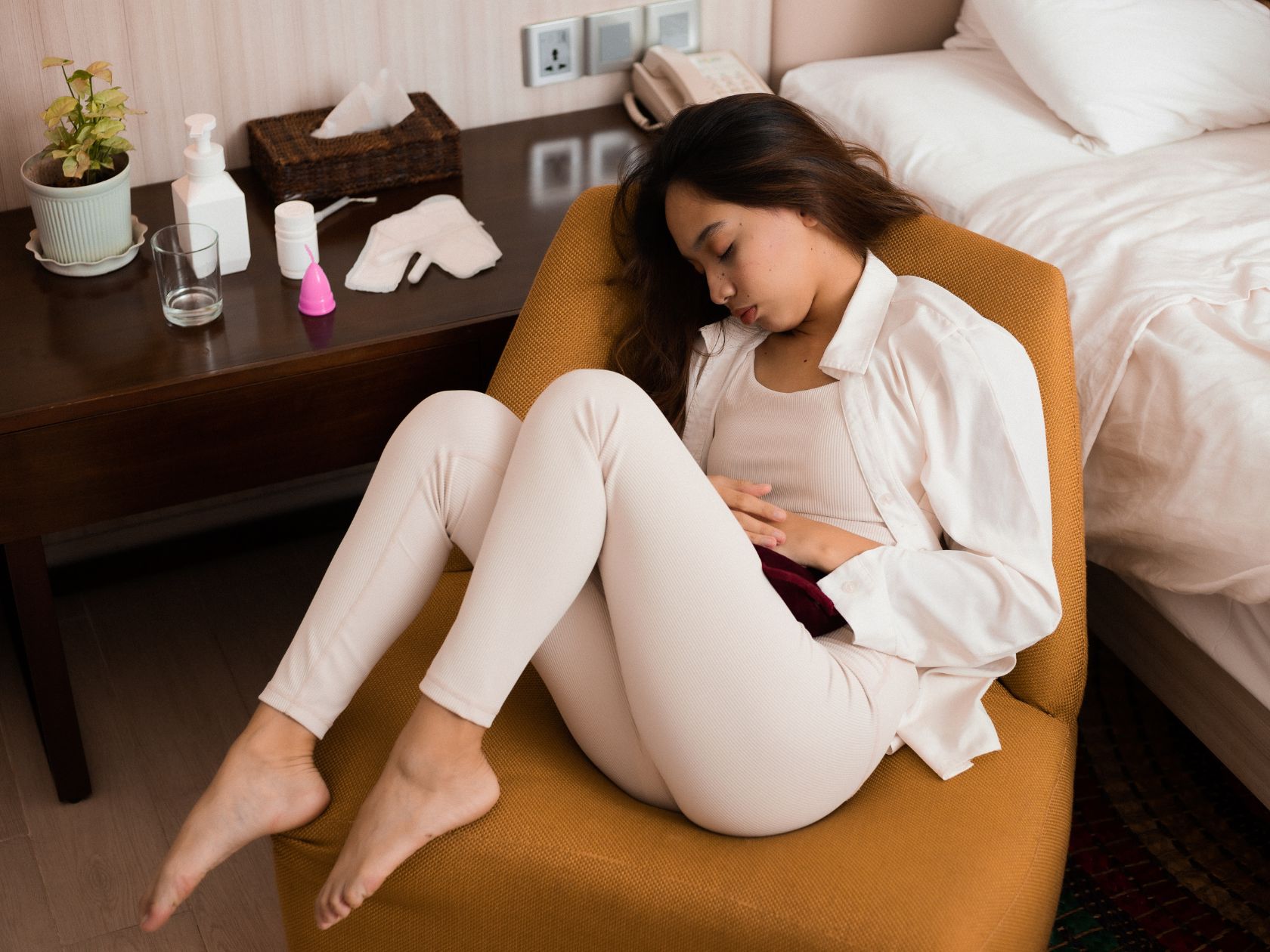
Not all period pain is endometriosis, so don't worry. However, certain characteristics should prompt you to see a doctor:
The trap is that many women have normalized this pain since adolescence. We grew up thinking "that's just how it is" and made it a point of pride to push through and not complain. As a result, we literally forget our most painful episodes because they have become the norm.
Signals rarely associated with endometriosis
This is often where the diagnosis really hinges. Endometriosis isn't limited to pelvic pain: it can manifest as digestive issues (constipation, bloating, pain during bowel movements), very heavy bleeding, unexplained chronic fatigue, or even difficulty conceiving and early miscarriages. The fact that these symptoms affect such different areas of the body (digestive, urinary, emotional) largely explains why so many women don't make the connection to their cycle for several years. If you are currently trying to conceive, the series Fertily Diet explores the link between nutrition, inflammation, and fertility.
According to the French National Authority for Health, the average time to diagnosis is 7 years after the first symptoms appear.
"I grew up thinking the pain was normal"
This is the story of Aïssa, now a health coach, who lived with undiagnosed endometriosis for a long time. A former lawyer, she recounts spending twenty years normalizing intense period pain, heavy bleeding, and several early miscarriages without ever linking them to a medical condition. It was a particularly violent episode of pain during a bowel movement, coinciding with the first day of her period, that finally pushed her to seek medical advice. The diagnosis came at age 39: stage 4 endometriosis, one of the most extensive forms of the disease, which doctors believe had been present for about twenty years.
Her story illustrates a mechanism found in countless women: the pain becomes so familiar that we literally stop noticing it. "Someone once told me it was normal, so I never complained again," she summarizes. It’s not a lack of self-awareness; it’s an adaptation, almost a survival mechanism in the face of a system that for a long time did not take this pain seriously.
What makes her story particularly telling is the roundabout path her diagnosis took. Two years before her endometriosis diagnosis, a routine fertility check-up (done simply to "see where things stood") revealed uterine fibroids. She was reassured: their location wasn't problematic, her ovarian reserve was good, and she could go on with her life without worry. It was only later, following a very violent pain during a bowel movement that coincided with the first day of her period, that she sought medical advice again. The radiologist who performed her MRI then informed her of severe endometriosis, which he estimated had been present "for about twenty years."
This moment was filled with conflicting emotions: a true sense of relief to finally put a name to a pain that seemed to have come out of nowhere, but also a form of retrospective guilt. "How could I have normalized everything for twenty years?" she wondered. Digging deeper with her loved ones, she realized she had even forgotten certain objectively very painful episodes, as they had become such a part of her daily life. This phenomenon is not isolated: many women grow up with the idea, often passed down by a mother or older sister, that period pain is "just part of the deal." This normalization, both cultural and familial, very concretely delays the age at which one dares to seek help.
Aïssa shares her entire journey, from the diagnostic odyssey to her career change as a health coach, in a video you can find right here: Aïssa's full testimonial.
What is often confused with endometriosis
Part of the difficulty in diagnosis stems from the fact that several conditions share very similar symptoms. Distinguishing between them helps to better guide the discussion with your doctor.
Adenomyosis
This is a close cousin of endometriosis: in this case, endometrial-like tissue infiltrates directly into the uterine muscle rather than growing outside the uterus. You can have adenomyosis without endometriosis, and vice versa. Both cause very similar pain and heavy periods, which explains some of the diagnostic confusion.
Polycystic Ovary Syndrome (PCOS)
PCOS also affects about 1 in 10 women of childbearing age. It manifests more through irregular cycles, excessive hair growth, or fertility issues related to ovulation, rather than intense pelvic pain. However, both conditions can coexist in the same woman.
Irritable Bowel Syndrome (IBS)
Because endometriosis often affects the digestive system (bloating, constipation, diarrhea), it is frequently mistaken for simple irritable bowel syndrome, especially when pelvic pain is subtle. The link to the menstrual cycle is precisely the clue that should point toward another path.
In any case, a comprehensive assessment remains essential before drawing conclusions: it is the combination of symptoms, not just one of them, that leads to the correct diagnosis.
The diagnostic journey step by step
There is no single test to diagnose endometriosis. It is a combination of factors that allows for a diagnosis, and choosing the right practitioner makes all the difference.
The consultation and clinical examination
It all starts with a detailed interview: how long have you had these pains, at what point in your cycle do they occur, and are they associated with other issues (digestive, urinary, sexual)? A gynecological exam may then be performed. This is an essential step, but it depends heavily on the practitioner's training: some doctors are much more aware of endometriosis than others.
Specialized pelvic ultrasound
This is the first-line examination recommended by the French National Authority for Health (Haute Autorité de Santé). It helps identify certain lesions, particularly in the ovaries. Its reliability depends enormously on the experience of the practitioner performing it: a standard ultrasound is not always enough; ideally, you need a practitioner specifically trained in identifying endometriosis.
Pelvic MRI: taking it a step further
When an ultrasound is not enough to confirm or precisely map lesions, a pelvic MRI (sometimes a whole-body MRI) is prescribed. It must be interpreted by a radiologist specializing in this condition, as a non-specialized reading can miss deep-seated lesions.
New diagnostic tools
Research in this field is moving fast. A saliva test, the Endotest, is currently being evaluated by the French National Authority for Health as a promising complementary tool. Artificial intelligence is also beginning to be used to assist in interpreting MRIs, with the goal of increasing speed and reliability. These tools do not replace medical expertise; they are there to support it.
Why diagnosis takes so long
Several factors combine: the cultural normalization of period pain, the enormous variability of symptoms from one woman to another, and significant disparities depending on the practitioners consulted. Endometriosis can also be asymptomatic and discovered during a fertility assessment, as was the case for Aïssa, whose endometriosis was first suspected during a routine fertility check-up before being confirmed a few years later.
There is also no direct link between the intensity of the pain felt and the severity of the disease: you can have few lesions and a lot of pain, or vice versa. This is precisely why a multidisciplinary approach (gynecologist, but also a trained midwife, naturopath, or health coach) makes so much sense: everyone contributes a piece of the puzzle.
What you can do right now
Key takeaways
Pain that does not subside with simple painkillers, that returns every month stronger than before, or that is accompanied by digestive issues and extreme fatigue, warrants a proper consultation. Diagnosis relies on a combination of elements (medical history, specialized ultrasound, sometimes MRI) and the right practitioner, trained in this condition that is still too often overlooked. You do not have to downplay what you are feeling to be taken seriously.
Going further on Reflet
This article is just a starting point. To deeply understand the mechanisms of endometriosis (pathophysiology, inflammation, microbiota, infertility) and, most importantly, the concrete natural solutions to implement in your daily life, join Reflet and watch our health series Invisible Endometriosis, hosted by Carole Minker: solid scientific foundations, explained simply, and real, step-by-step action.
Two other Reflet resources may also be useful depending on your situation:
All our health series are created with healthcare professionals, designed in three stages (scientific data, concrete solutions, taking action), and accessible by subscription, like a Netflix for women's health.
This article is for informational purposes only and does not in any way replace medical advice. Only a healthcare professional can diagnose endometriosis.
Do I definitely have endometriosis if I have pain during my period?
Programs that could help

Les Séries Santé recommandés

Do we freeze our oocytes?
Le Rubis is the first podcast dedicated to egg freezing. I answer all your questions about this journey, I wonder about the emotional impacts of this approach and I give you the keys to take action , as long as it's your choice! If you asked yourself the question Once in your life, Le Rubis is made for you. Available only in French speaking.
I discover the Ruby.webp)


.png)

.png)


